
Why do bad things seem to happen most on Monday mornings? We even call it “Blue Monday.” Take the builder, for example, who wasn’t named Additional Insured on his exterior painter’s general liability policy.
Our builder came to work one fine Monday morning to discover a voice-mail. His painter had over-sprayed a dozen parked cars in a lot across the street from his three-story townhouse project that was nearing completion. It happened on Saturday, which was windy. Too windy for spray painting three floors up. The cars belong to a pre-owned Corvette dealership. Each Corvette is worth an average $40,000. The estimated cost to re-paint all twelve is over $104,000. The painter admitted he’d messed up big time and lamely explained rain was forecast for the next four days, so he decided to “make hay while the sun shined.”
Our builder’s subcontractor was obviously at fault. Our builder had no part in this loss. When he hired the painter he expected he was dealing with a professional who knew his job. Yet our builder’s general liability policy, not the painter’s, is going to pay the claim. Our builder’s insurance company, not the painter’s, is going to defend him in the lawsuit soon to be filed by the Corvette dealership. They are claiming loss of market value now that they have to disclose to customers that their inventory had been damaged. This is going to get ugly and consume large amounts of our builder’s time. His insurance company may not renew his policy. Why? Simply because our builder was not named Additional Insured on the painter’s policy. So, what’s so important about being named Additional Insured anyway?
When you require your subcontractors to list you as Additional Insured on their general liability policies, you become entitled to insurance coverage benefits under their policies. Additional Insured status is most often used in connection with an indemnification agreement, also known as a hold-harmless clause. Hold harmless clauses are common in properly executed contracts between you and your subcontractors.* Under a hold-harmless, your subcontractors agree not to hold you responsible for their negligent acts which may happen while they are working for you. Without you being Additional Insured on your subcontractors’ policies, you can be brought into any suit resulting from your subcontractors’ negligent acts. Without a contract clearly holding you harmless, your general liability insurance company may have to cover the loss and defend you if you are sued. They may seek reimbursement from your subcontractors’ insurance companies, or the subcontractors themselves. Your insurance premium could increase due to the greater exposure, or your insurance company may even decide to not renew your coverage.
Additional Insureds! Hold-harmless clauses! Contracts! Maybe every day is Blue Monday when you have to deal with such things. Consider this, however; why jeopardize your insurance coverage because an incompetent painter decided to use a spray gun on a windy day?
The RWC Insurance Advantage is committed to providing you with the best possible general liability insurance protection. But, we need your help. Here’s a checklist:
(1) Review your contracts with all your subcontractors.*
(2) Are you named Additional Insured on all their general liability policies?
(3) Do they all hold you harmless for all claims while working for you?
(4) Do you obtain up-to-date certificates of insurance every year from each one?
If you have questions about this article or would like us to review your general liability insurance needs, we’d like to hear from you. Contact us by email or call us at: info@rwcinsuranceadvantage.com or 866-454-2155
Make Blue Monday a little less blue.
*Please consider consulting an attorney if you need assistance in drafting contract language. This article is intended to help you better understand general liability insurance terms and coverages. It is not to be construed as legal advice. Terms and conditions of various insurance company policy forms may vary.
RWC Insurance Advantage (RIA) recently launched a new website and if you haven't checked it out yet, we encourage you to do so! RWC Insurance Advantage is exclusive to members of the RWC and HOME of Texas warranty programs. Members can now request a quote, apply for coverage or request certificates all from their computer or mobile devices. Here's what RIA offers:
General Liability Insurance* - General Liability is insurance that protects you from a variety of claims including bodily injury to members of the public and damage to property belonging to others that arise out of your business activities. RIA can offer options in the form of an Occurrence Policy or a Claims Made policy. Please visit our website for FAQ’s on these coverage forms.
Umbrella and Excess Insurance* – In conjunction with McGowen Excess and Casualty, these policies provide you with additional limits (usually $1mm to $5mm) of liability above your General Liability policy. Since a General Liability policy protects your business from bodily injury and property damage claims that you become legally obligated to pay, it is essential that you have proper limits in place to protect your business. In today’s litigious society, a $1,000,000 of General Liability insurance may not be enough. Check out FAQ’s on our website. Look under products.
Builders Risk Insurance – We are an authorized agent for one of the worlds largest insurers…Zurich. Builders Risk insurance protects your financial interest in the materials, fixtures and/or equipment being used in the construction, or renovation of a building, or structure in the event they are damaged or destroyed by a covered cause of loss like fire, windstorm, vandalism or theft.
Contractors Equipment Insurance – With Zurich, Contractors Equipment coverage is property insurance that covers the loss of, or damage to covered equipment owned by you, or in your possession resulting from such hazards as fire, theft or vandalism.
As a leader in the residential home building industry we are committed to providing general liability insurance and select other coverages to members of Residential Warranty Company, LLC, throughout the United States*.
Before you renew coverage elsewhere, consider getting a quote with RIA. Just visit our website and click on the Get A Quote button and answer a few easy questions. We will reply via e-mail with a price indication.
*Insurance products may not be available in all states & are subject to underwriting requirements.
“Limited inventory”. “Rising interest rates”. “Barbell of imbalance”. Many homebuyers and real estate professionals alike are finding themselves challenged by the law of scarcity in today’s market. Simply put, there are more buyers than there are homes to fill. Anyone in the home building and buying world is intimately aware of the impact presented to us with this unique situation. There are several factors creating this imbalance.
 First-time homebuyers who are starting families and move down buyers who are looking to downsize have put a strain on the inventory availability. The need for each group is similar, the wants may differ, but the need can be met with access to more inventory of affordable homes. With the average sales price of homes increasing exponentially, the opportunities for these buyers is continually diminished. Add in the threat that homes will now cost more because of rising interest rates, and a crisis is created. Interest rates are not currently creating a deferral impact upon buying trends, however, as the prices continue to rise, it prices many families out of the market entirely.
What does this all mean? To put it bluntly, the market needs more homes for the fixed income and average income buyers. Meeting these buyers needs starts at a price point and includes flexible options. Fixed income buyers who are downsizing tend to fall into the group of sellers that are cashing in on the equity increases in their current homes. They may be retiring or reducing their workload, pushing them toward fixed income levels. However, first-time homebuyers have a different hurdle. These apartment and rental home buyers need better programs in place to help them get out of the rental trap. With the increased need for rentals came the increased cost of renting. Many of the options available for renters taps out their income which reduces the chances that they can save money for a down payment. A good rental history shows they can afford the home, but they don’t have the income set aside for a 20% down payment. Does your company offer incentives to first-time homebuyers? What can your trusted lenders do to help them?
Although it is a challenge for the buyers, it is a positive for sellers and builders who are looking to gain a profit after a long stretch of being at a standstill. This opportunity for growth for builders is understandably a cautious undertaking. Willingness to work with these buyers can be rewarding to builders but it is wise to take precautions to avoid the pitfalls of the past. Ensuring that you work with other professionals who are licensed properly and that you are providing a high quality, warranted homes will set you as a builder apart from the crowd. Many lenders are now requesting that a 10-year structural warranty is in place when the buyer is using FHA/VA and USDA financing. As a member in good standing with RWC, you are in a position to meet this requirement and can meet the buyers lending needs.
In conclusion, home buying needs and demands are at the crossroads between availability and affordability. Somewhere in the middle is exactly where builders should strive to be to reap the rewards. As a tradeoff, qualified buyers are willing to settle for higher interest rates if given the opportunity to achieve the long-term goal of homeownership. Scarcity is real, but buyers are abundant.
 This weekend marked the 48th anniversary of Earth Day. On April 22, 1970, millions of Americans came together to fight for a clean, sustainable environment and that fight still continues today. Consumer-awareness has increased over the years, and so has the demand for Earth-friendly products and procedures. According to the NAHB, and in conjunction with a series of studies conducted by Dodge Data & Analytics, “at least one-third of surveyed single-family and multifamily builders said that green building is a significant portion of their overall activity. And by 2022, this number should increase to nearly one-half in both sectors.”
You, as a builder, can have a big impact from the get-go; essentially starting with a clean slate for every home you build. How can you contribute to the home’s carbon footprint? Simply look around a typical house. There are opportunities everywhere to make improvements or conserve. Do you incorporate environmentally-friendly features such as water saving faucets and toilets, low VOC paints and adhesives, and energy-efficient appliances and systems? Not only is saving money for the long haul important to buyers, but the way the home itself impacts the future (and present) environment is also significant.
House hunters today have a lot of choices when it comes to choosing a builder. Will you measure up? Do you have special certifications such as LEED or Energy-Star? Have you won awards for your ecological principals? If green building is in your wheelhouse, then show off -- highlight these practices on your website, social media, on promotional materials, and by word of mouth! Those are exactly the types of things that consumers today are attracted to.
More and more builders are joining the green home movement with sensitivity to nature preservation and homeowner requests. Slowly but surely, eco-friendly elements are becoming the ‘standard’. If you haven’t done so already, incorporating just a few of these building practices will be beneficial for your business. With this buying preference in mind, there is much opportunity and value in this market. Prospects will certainly do their research when planning for their dream home and you may just win them over when Mother Nature is in your corner.
It is perennially important that builders focus on keeping whatever profits they can generate by managing their risks and limiting their potential liability. Homeowner claims for defective construction can eat away profit in the form of repeated customer service and punch list work, prolonged disputes with customers, payments to disgruntled homeowners, and attorney fees. Here are some suggestions for limiting that exposure.
 Employ proper construction practices. This may seem like an elementary point, but contractors who are building new designs in unfamiliar locations or who are desperate for sales are more likely to fall short in this regard. Proper education for workers, regular inspection by builder representatives, and professional oversight from engineers and attorneys, for example, as needed, can limit builders’ exposure to homeowner claims and to other risks like OSHA fines and penalties.
Watch for and avoid subcontractor problems. Your contract is with your customer. If a subcontractor’s work harms your customer, that customer will look to you to make it right. Use capable subcontractors and inspect their work so that you know you are getting what you pay for. Make certain your subcontractors are insured and consider being named as an additional insured on their liability insurance policies.
Service your customer. As we so often hear in lending and home building advertisements, the purchase of a newly built home is almost always the largest transaction your customer will make in his life, and he will likely spend ten or twenty or thirty years paying for it. Consequently, your customer will expect you to address any reasonable post-settlement concerns he has about your product. Prompt and courteous communication with home buyers after the sale and faithful attention to those concerns that are properly your responsibility will not only create a positive buzz about you as a builder but will also reduce the chances that a homeowner will sue you.
Avoid the problematic customer. Some customers are simply not worth the trouble. They will often demonstrate this early in the relationship, before the contract is signed, by making impossible demands on your time, asking for incredible reductions in price, or complaining about other builders they have seen or other businesses with whom they have had disputes. While some such demands and complaints may be legitimate, it is important to recognize the customer who will never be happy. That kind of customer limits your ability to make a profit on a house, often retains a lawyer to sue you and should be avoided whenever possible.
Shift the risk. Make sure you have adequate insurance to protect you against liability risks and take full advantage of your associates’ insurance policies by being named an additional insured whenever appropriate. Purchase a warranty product to provide to your home buyers to shift some of the risk for construction defects onto a third party.
 Don’t be afraid to settle homeowner cases. If sued or threatened with suit immediately ask your attorney for an assessment of the chances of success and an estimate of what it will cost to get to that result. Too often clients complain that fighting a lawsuit has cost them more than settling it earlier would have. Some battles must be fought, but not all of them. Pick the ones you want to fight and have at it. For each of the others, make a good business decision and solve the problem on the most cost-effective basis possible.
Manage your attorney fees. Lawyers are struggling with the same economy you are. If a lawyer has quoted you a certain rate, you should not hesitate to negotiate with her to see if she will take the case for less. Insist that a fee agreement is prepared in writing for signature by you and your lawyer. Encourage the lawyer to assign less complicated work to less expensive members of the firm like associates, paralegals, and clerks. Finally, obtain an estimate of the cost of defending the case up front. This provides you with information necessary to determine whether you should settle the case, helps with budgeting, and serves as a cap on fees by at least requiring a persuasive explanation from your attorney if the cost of defending the case exceeds what was estimated.
Consider alternative and early dispute resolution options. Arbitration is often less expensive than a full-blown jury trial. Mediations offer opportunities for adversaries to sit down together and work with a neutral third party to resolve disputes. These alternative dispute resolution options are less combative and less expensive, and when employed early, can result in significant savings in attorney fees and costs for all parties involved in the dispute.
For a builder to succeed in any economic conditions, he must accept some risk of loss and exposure to liability. It is good business sense to implement strategies to limit those risks and exposures, especially when money is tight and so many builders are conducting business in new ways.
In addition to the strategies listed here to help reduce risk and exposure, builders who include a warranty on their homes are making a smart decision. A warranty not only eases the buyer’s mind should a defect arise in the future, but it also limits the builder’s liability, thus helping them keep as much of their hard earned profit as possible.
 A new home is a major purchase, and homeowners will certainly weigh the pros and cons when choosing a builder. Of course, a builder’s reputation, integrity, craftsmanship, and success stories will lay the foundation (um, pun intended), but one surefire way to assure buyers they’re in good hands is to include an RWC new home builder warranty with the home. If unforeseen circumstances should arise and a builder is unable to honor their commitment, a written, insured warranty will be a lifesaver.
So let’s talk about one of the most valuable features of the RWC builder warranty -- the resolution process. All Unresolved Warranty Issues have the opportunity to benefit from the warranty’s resolution process. An Unresolved Warranty Issue is defined as, “All requests for warranty performance, demands, disputes, controversies and differences that may arise between the parties to this Limited Warranty that cannot be resolved among the parties. An Unresolved Warranty Issue may be a disagreement regarding:
- the coverage in this Limited Warranty;
- an action performed or to be performed by any party pursuant to this Limited Warranty;
- the cost to repair or replace any item covered by this Limited Warranty.”
Builders often wonder, do I become involved or should I let RWC handle it? The answer is... the Member's involvement is crucial to a resolution and here's what's involved:
Mediation is the first step to resolution. The Member’s proactive communications is critical. Upon receipt of a homeowner’s proper written notice, RWC will communicate with the Member and the Homeowner. We’ll discuss the relevant information, actions taken, and coverage standards that apply. RWC will also explain why an issue is not covered and we’ll secure the Member an opportunity to resolve the issues.
Inspection of the issue is another avenue of resolution. As the Administrator, when the insurer is the warrantor and responsible party under the warranty, RWC will perform an inspection of the issue. The Member’s involvement in providing RWC with all relevant information, such as a copy of the Member’s customer service file is important to RWC having complete data prior to making a coverage determination. The Member is encouraged to discuss the issue with RWC and provide any relevant construction information that would assist RWC with understanding the construction practice that was utilized.
Arbitration is the final and binding step. If the request cannot be resolved through mediation or the Homeowner disputes RWC’s coverage determination, binding arbitration is the next step provided under the warranty’s resolution process. The Homeowner begins the arbitration process by giving RWC written notice for arbitration of the Unresolved Warranty Issue. The decision of the Arbitrator shall be final and binding upon all parties. When the Member is the Warrantor, participation in the arbitration proceeding is essential to the arbitrator understanding the Member’s position and the Member’s warranty obligation. The arbitration shall be conducted in accordance with the Limited Warranty and the rules and regulations to the extent that they are not in conflict with the Federal Arbitration Act.
Mediation, Inspection, and Arbitration……3 fundamental steps to RESOLUTION!
In today’s economy and its effect on the residential home building industry, having the RWC warranty as a source of resolution for homeowners and builders to resolve their disputes is an excellent and proven customer service tool. It also gives homeowners a confidence in knowing that if their builder no longer remains in business there is a dependable warranty standing behind their home.
 It takes many components to build a home, and as a builder, you have to make many decisions to make. The homes you build need to be of quality construction, attractive and offer inviting features to pull in buyers. Though not a physical characteristic such as a large kitchen island or crown molding, a new home warranty is an equally impressive detail that proves to be advantageous over and over again.
If you haven’t ever thought about offering a warranty on your homes or are wondering “What’s in it for me?”, Residential Warranty Company, LLC (RWC) has the answers.
1. Opens the Door:
Homeowners looking for assurance that they have picked a quality builder are more confident in their choice when the RWC warranty comes with their home. And RWC’s approval by FHA and VA can assist you with your sales and help eliminate inspections and facilitate settlements.
2. Levels the Playing Field
Customer service can be a tricky issue. Homebuyers today can be demanding and unfortunately, too often unreasonable. Yet your reputation and future referrals often hang in the balance. You can provide an implied warranty (increase your exposure) and take a chance. Or you can provide the RWC written warranty (limit exposure) and enjoy its benefits. Specific warranty standards help you manage customer service problems and reduce costs. The RWC warranty puts “reason” back into the equation and lets you provide fair customer service. And when disputes arise - as they certainly will - RWC offers effective mediation and binding arbitration.
3. Marketing Tool
Hammers...saws...nails...it takes lots of tools to build a house. It also takes lots of tools to build a business and RWC provides you with some great marketing tools. Buyers today want choices and RWC offers more choices in warranty plans than any other warranty company. Convincing a buyer that you have what he wants or needs is the surest way to a sale. We want to help you convince that buyer. Not only does RWC offer a 10 year new home warranty, but a variety of other warranties are available as well. Other options include remodeling warranties, detached garage, building systems, HUD-code warranties, and customized state warranties... just to name a few. See our entire menu of choices here.
Don’t hesitate ~ RWC is a great addition to your toolbox! Talk to an RWC Account Executive today about the benefits of being an RWC Member or click here to get a warranty quote.
MORE PROSPECTS = MORE POTENTIAL BUYERS = MORE HOMES SOLD
 Typically home buyers have the choice of two types of homes on the market: resale or new. According to NAHB, home buyers planning to buy (or build) a brand-new house or condo often cite energy efficiency, an open floor plan, a warranty, and being able to select specific items such as appliances, types of flooring, and colors schemes as factors driving their choice.
Let’s talk about that one intangible product homeowners want that isn’t used or seen on a daily basis - a warranty. Friends and family may admire the great room’s high ceilings or ooh and ahh over the gourmet stove, but that doesn’t make a warranty any less attractive. In the event that a home would develop a Defect, a homeowner will be grateful that their Builder was savvy enough to protect their home with a warranty. The average cost to repair a major structural failure exceeds $30,000. Having a written and insured warranty in place on the home means that warranted structural components will be repaired without causing the homeowner serious financial hardship. Now that kind of peace-of-mind is truly priceless.
The numerous advantages of having a warranty on a newly built home simply go beyond words on paper. It's a state of mind -- a feeling of security and comfort. In fact, a new home warranty from Residential Warranty Company, LLC (RWC) is one of the least expensive, longest lasting products a builder can purchase for the homes they build. It brings incredible value to the table not only for the builder and the initial sale but subsequent resale value as well.
With over 3 million homes warranted and 35+ years’ experience under our belt, RWC and affiliates have established itself as a rock solid leader in home protection and risk management. So we ask, besides your standard 10-year warranty, how else can RWC help you and your buyers?
Remodeling? There's a warranty for that. Building a modular or log home or working on a commercial project? We have that covered, too. Or maybe you’re looking for something a little more customized for the state you build in? We’ve got an exclusive for you! RWC’s Customized State Warranty (CSW) Program is the most unique and specialized warranty program in the industry. Each individual state warranty is crafted to meet that state’s statutes regarding new home warranties. Also available are free training session for your staff, free marketing materials, and various commercial lines of insurance including general liability, builder’s risk and contractor’s equipment exclusively for members through the RWC Insurance Advantage.
Whether you are brand new to RWC or a longtime member, know that we are here to help you provide the peace of mind that homeowners crave. Be sure to take full advantage of the numerous warranty options and services. Don’t miss this opportunity to give your buyers the best house warming gift yet!
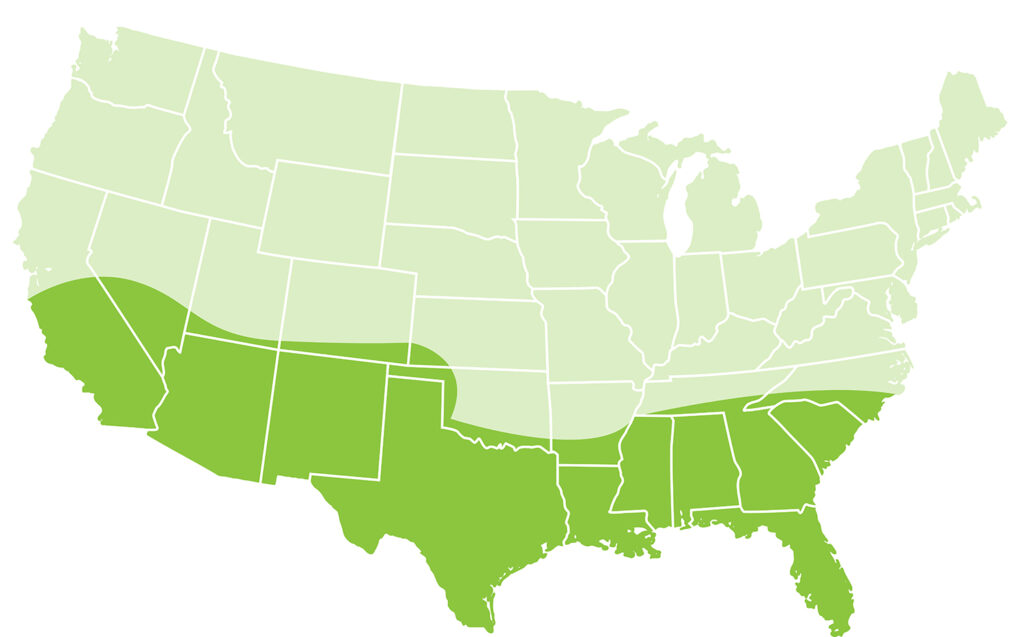 Builders, manufacturers and remodelers have new opportunities moving their way. As Sun Belt City populations grow, the need for new homes, remodels, additions and communities arise. Protect your investment with an RWC, HOME of Texas or MHWC warranty. Not only will the warranty limit your liability and give you the competitive edge, but it will also add value to your home and give your homebuyer that peace of mind they crave. Read on to learn more about this shift to warmer climates and be sure to take advantage of the many benefits RWC and affiliates have to offer.
The sun is shining, literally and metaphorically, on many states located within the Sun Belt. New data from the U.S. Census Bureau reveals that more people are choosing to leave the northern regions of the country, especially the Midwest, to settle in warmer climates.
The data includes population estimates and analysis of population changes for U.S. counties and metro areas, providing statistics for total population change, shifts in population due to natural increase, and domestic and international migration between July 1, 2014, and July 1, 2015, the Joint Center for Housing Studies of Harvard University reports.
The general trend shows that Sun Belt counties and metros — specifically, suburban counties in the South — are attracting the most new residents.
Texas, in particular, has been drawing people from other parts of the country, with Houston and Dallas-Fort Worth experiencing more growth than anywhere else in the U.S., gaining 159,000 and 145,000 people, respectively. A little further down the list are two other Texas metros, Austin-Round Rock and San Antonio, each of which grew by about 50,000 people. Combined, the population gain for these four Texas metros is 412,000, the highest total for any state. Florida, California, Georgia, and Washington round out the top five.
The counties that experienced the greatest population growth were also located in the southern and western regions of the Sun Belt. Harris County, Texas, and Maricopa County, Arizona, were the top two. All of the top 30 counties, in terms of population growth, were located in the West or the South.
Further breakdown of the overall population gains shows that Americans are seeking the sun. Domestic migration was also trending toward Sun Belt states with the top 10 counties for net population influx being located in Arizona, Florida, Nevada, and Texas. Many of the counties that appealed to domestic migrants also appealed to international migrants. However, some places, such as Los Angeles County, had high international migration but actually lost domestic migrants.
On the flip side, among the top 100 metros, Chicago had the biggest net population loss, with a drop of 6,200. Pittsburgh was next, losing 5,000 residents.
Source: Professional Builder
When a builder provides a warranty on a newly built home, what exactly does that mean to your buyer and to you? It means protection, security, peace of mind and value. And a warranty from Residential Warranty Company, LLC will provide just that. One of the least expensive, longest lasting products a builder can purchase for the homes they build is an RWC warranty.
So why exactly is RWC your best choice?
OPTIONS: The RWC “Menu of Choices” allows you the ability to offer the best Warranty program for your business. From our FHA/VA accepted Standard 10 Year Warranty to our Day 1 Coverage Warranty to our Customized State New Home Warranty to our Remodelers Warranty and more, we have what your business needs.
FLEXIBILITY: RWC’s members are able to pick and choose which Warranty options to use and which projects they wish to enroll. We do not require 100% enrollment on detached homes.
MARKETING FEATURES: RWC provides its members with FREE attractive marketing materials to help promote your business and set yourself apart from your competition.
EASY: RWC offers online enrollment, the ability to order marketing materials, renew memberships and run reports through Warranty Express.
EXPERIENCE: RWC has been in business for 35+ years and has warranted over 3 million homes to date. The average tenure of our employees is 18 years.
STRENGTH: RWC’s insurer, Western Pacific Mutual Insurance Company (WPMIC), A Risk Retention Group, is A.M. Best rated “A- (Excellent)”. WPMIC insures only our thoroughly screened builder members and no other catastrophic risks such as planes, trains or automobiles, which can affect an insurer’s strength and equity. Less risk equals more strength. In fact, WPMIC currently has over $111 million in surplus equity.
CREDIBILITY: RWC’s membership criteria presents us with the strongest builder members. This screening process reinforces your credibility as an RWC member.
PROTECTION: RWC offers FREE mediation. When needed, binding arbitration is also available. Both offer effective resolution for Warranty disputes. This reduces your risk of litigation and legal fees.
ADVOCACY: RWC provides support to the Home Building Industry through our involvement and financial contributions as a member of local, state and national Home Builder Associations across the United States.
Our mission is to provide a level of security to homeowners and Builders alike. We can help you in maintaining or improving your customer service, define and limit your liability, and provide the warranty and insurance products your company needs. For more information, don’t hesitate to call 800-247-1812 x2149 or email sales@rwcwarranty.com.