
 Did you know that as a member of RWC or HOME of Texas you may be eligible for our General Liability Insurance Program through RWC Insurance Advantage? If you would like to learn how we might meet your general liability coverage needs, call RWC Insurance Advantage today at 866-454-2155 or click here to get a quote. Plus, be sure to read on for some helpful hints about certificates of insurance, subs and staying on top of policies.
Insurance agents hear it all the time; are certificates really that important? If my subs’ certificates aren’t current, am I on the hook for what their policies don’t cover? What about exclusions on my policy? Maybe a hypothetical claim will help provide some answers. Let’s say you contract with a roofer. He’s not the roofer you usually work with but, he has a good reputation and he gives you a certificate of insurance that shows he has his own General Liability policy. It has the same limits as your policy with the RWC Insurance Advantage program. No worries here. His policy will respond first to injuries or damage to others that he might cause while working on your behalf. However, you also notice his Workers Comp is due to renew in about a week but, he assures you the renewal is going to happen and he’ll provide you with an updated certificate just as soon as he gets it from his agent. You need to get your latest project under roof as soon as possible because the weather has been uncertain; so, you decide to take a chance. Besides, it shouldn’t take a week to do a roof. What could go wrong?
The weather takes a turn for the worse. By the time the roof is started it’s been over a week. Then you get the news one of the roofer’s employees has been injured. He didn’t fall but, he hurt his back. Only then do you remember the promised certificate hasn’t appeared. Then your roofer admits his policy was not renewed because he failed to make a payment. Your policy doesn’t cover injuries to the employees of subcontractors. That’s because workers compensation insurance is available to them and is designed to cover the medical bills and lost wages of his employees. As it turns out, waiting for a renewal certificate of insurance might have avoided you being held liable for a loss that isn’t covered under your policy.
• Make sure all your subcontractors provide you with up-to-date certificates of insurance.
• Ask them if they have any open or, unreported claims.
• Be aware of what your policy does and does not cover.
Don’t let someone else’s lack of planning become your problem.
Source: nahb.com
Whole house remodels and additions are regaining market share according to a 2016 survey of remodelers released by NAHB Remodelers, the remodeling arm of the National Association of Home Builders (NAHB). The survey revealed the most common remodeling projects in 2016, compared to historical results of the survey.
“While bathroom and kitchen remodels remain the most common renovations, basements, whole house remodels and both large and small scale additions are returning to levels not seen since prior to the downturn,” stated the 2016 NAHB Remodelers Chairperson. “Clients want to add more space, but remodeling a significant portion of the home is no easy feat. That’s why it is important to work with a professional remodeler who has the integrity and expertise to take on these large remodeling jobs.”
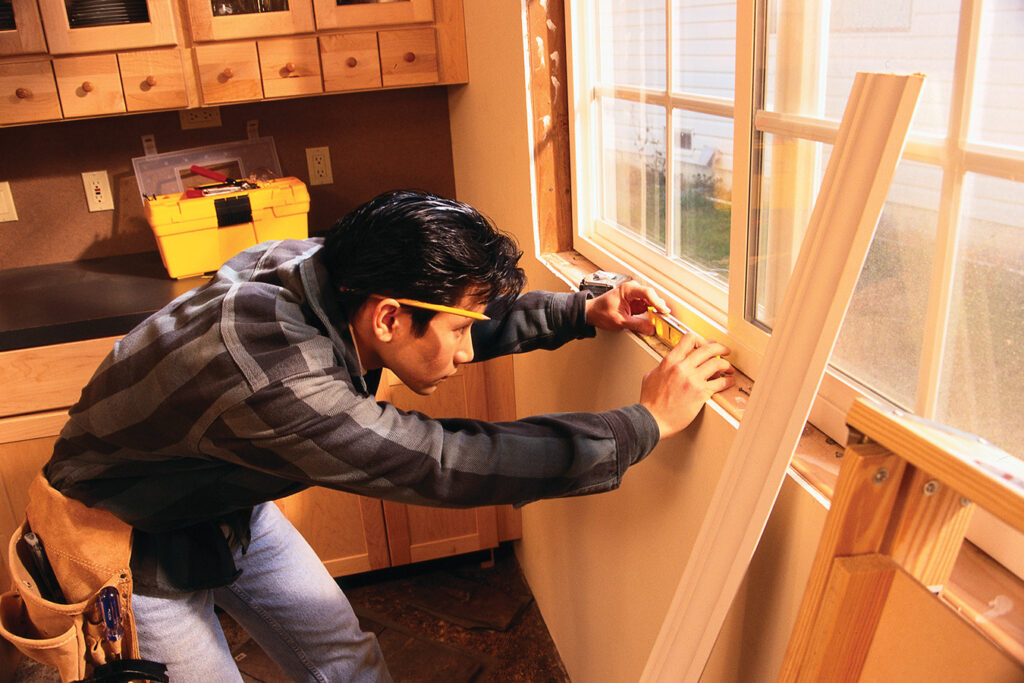 Remodelers reported that the following projects were more common than in 2013:
• Whole house remodels increased by 10 percentage points
• Room additions increased by 12 percentage points
• Finished basements increased by 8 percentage points
• Bathroom additions increased by 7 percentage points
Bathrooms topped the list of most common remodeling projects for the fifth time since 2010. Eighty-one percent of remodelers reported that bathrooms were a common remodeling job for their company while 79 percent of remodelers reported the same for kitchen remodels. Window and door replacements decreased to 36 percent from 45 percent in 2014.
Whether you are currently working on remodeling projects due to the colder weather and frozen ground or because that's what your customers are opting for, Residential Warranty Company, LLC & HOME of Texas have great remodeler warranty options at your fingertips. When it comes to revamping space, creating an addition to a home, or totally reinventing the look and style of a home, homeowners want to know the work is being done by a quality, professional remodeler. Contractors who offer the RWC warranty / HOME warranty provide clients with written, insured warranty protection, including a dispute resolution process.
It takes a lot of tools to both complete a remodeling project and to build a business. RWC / HOME offer you a great selection of tools. Talk to your account executive today for more details on the remodeler warranty, or any program available in our menu of choices.
 Source: proremodeler.com
Readers of news articles about the housing industry have been inundated for a while with stories about Millennials and their desire to live in the city. Headlines such as “Millennials Prefer Cities to Suburbs, Subways to Driveways” and “The New American Dream Is Living in a City, Not Owning a House in the Suburbs” popped up frequently. And polling companies provided the data to back it up: The Nielsen Company, for example, reported that 62 percent of young people “like having the world at their fingertips,” preferring to live in “dense, diverse urban villages where social interaction is just outside their front doors.”
But around the middle of 2015, the stories about Millennials started to shift. We began to see more stories like, “Think Millennials Prefer the City? Think Again …” And now, a survey from the National Association of Realtors says that Millennials are finally starting to buy homes. And where are they buying them? That's right, in the ’burbs.
Why all of a sudden the change? Perhaps Millennials are now ready to settle down and start families and prices are cheaper in the suburbs. Or because they want to raise their kids in places that remind them of their own childhood. Whatever the reasons, the numbers show that buyers under the age of 35 now make up the largest share of homebuyers (35 percent) and that 51 percent of them bought homes in the suburbs or in subdivisions.
It stands to reason that these buyers, whose median age is 30, are the leading edge of their generation. As the rest of this generation, 80 million strong, reach their 30s, they will likely follow the same path—research from the Demand Institute says 75 percent of Millennials consider homeownership an important long-term goal and 48 percent say they plan to buy within the next five years. The question is, are you building homes they will want to buy?
So what exactly does this young group want? Turns out they want pretty much the same things almost everyone else wants: a nice neighborhood; good schools; access to public transportation; & convenient outdoor space to walk and exercise. Another requirement is close proximity to social activities such as shops, cafés, and restaurants. As for the house itself, they are looking for an open plan, ample storage, energy efficiency, low-maintenance living, space for easy entertaining, and of course good cell reception. But the single most important thing Millennials are looking for is living within their means in a home they can comfortably afford.
Unfortunately, the problem is, there just aren’t enough new homes being built that Millennials can afford. Because of land and labor costs, zoning and other regulations, most builders are targeting a smaller, more affluent group of buyers. A lot of new homes are large and include more expensive features and amenities. Something that a young, first time home buyer, will probably pass right by because it is out of their price range. A recent study by real estate advisors RCLCO revealed that when first-time buyers considered new and existing homes in their searches, only 18 percent of them bought a new home.
There are some success stories out there, though. RCLCO reports that a concerted effort by some master planned communities to offer a range of product types, such as townhomes, cottage court bungalows, and small single-family homes—in addition to conventional single-family homes — “can still achieve premiums on a dollars-per-square-foot basis.” The company cites the Daybreak master plan near Salt Lake City as a good example of a project that successfully integrates midscale, mid-priced product within a larger community.
Companies that are building more affordable homes and marketing them to Millennials are already starting to reap the rewards. It’s time for more builders to start thinking about creating a product that is attainable for the largest faction of buyers we may ever see.
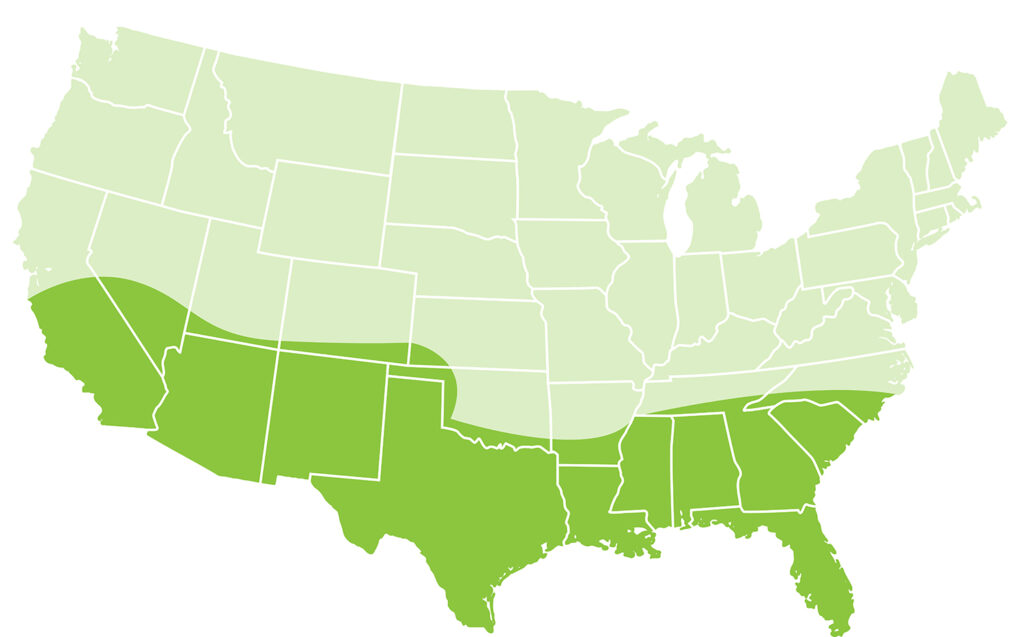 Builders, manufacturers and remodelers have new opportunities moving their way. As Sun Belt City populations grow, the need for new homes, remodels, additions and communities arise. Protect your investment with an RWC, HOME of Texas or MHWC warranty. Not only will the warranty limit your liability and give you the competitive edge, but it will also add value to your home and give your homebuyer that peace of mind they crave. Read on to learn more about this shift to warmer climates and be sure to take advantage of the many benefits RWC and affiliates have to offer.
The sun is shining, literally and metaphorically, on many states located within the Sun Belt. New data from the U.S. Census Bureau reveals that more people are choosing to leave the northern regions of the country, especially the Midwest, to settle in warmer climates.
The data includes population estimates and analysis of population changes for U.S. counties and metro areas, providing statistics for total population change, shifts in population due to natural increase, and domestic and international migration between July 1, 2014, and July 1, 2015, the Joint Center for Housing Studies of Harvard University reports.
The general trend shows that Sun Belt counties and metros — specifically, suburban counties in the South — are attracting the most new residents.
Texas, in particular, has been drawing people from other parts of the country, with Houston and Dallas-Fort Worth experiencing more growth than anywhere else in the U.S., gaining 159,000 and 145,000 people, respectively. A little further down the list are two other Texas metros, Austin-Round Rock and San Antonio, each of which grew by about 50,000 people. Combined, the population gain for these four Texas metros is 412,000, the highest total for any state. Florida, California, Georgia, and Washington round out the top five.
The counties that experienced the greatest population growth were also located in the southern and western regions of the Sun Belt. Harris County, Texas, and Maricopa County, Arizona, were the top two. All of the top 30 counties, in terms of population growth, were located in the West or the South.
Further breakdown of the overall population gains shows that Americans are seeking the sun. Domestic migration was also trending toward Sun Belt states with the top 10 counties for net population influx being located in Arizona, Florida, Nevada, and Texas. Many of the counties that appealed to domestic migrants also appealed to international migrants. However, some places, such as Los Angeles County, had high international migration but actually lost domestic migrants.
On the flip side, among the top 100 metros, Chicago had the biggest net population loss, with a drop of 6,200. Pittsburgh was next, losing 5,000 residents.
Source: Professional Builder
 Who doesn't love a perk that allows you to reap the rewards of something that you already do... provide quality construction and outstanding customer satisfaction. That's right, cash in on YOUR excellent customer service by joining the Incentive Program!
Joining the Incentive Program is the best way for our Members to maximize their dollars plus enjoy additional benefits that only this program offers.
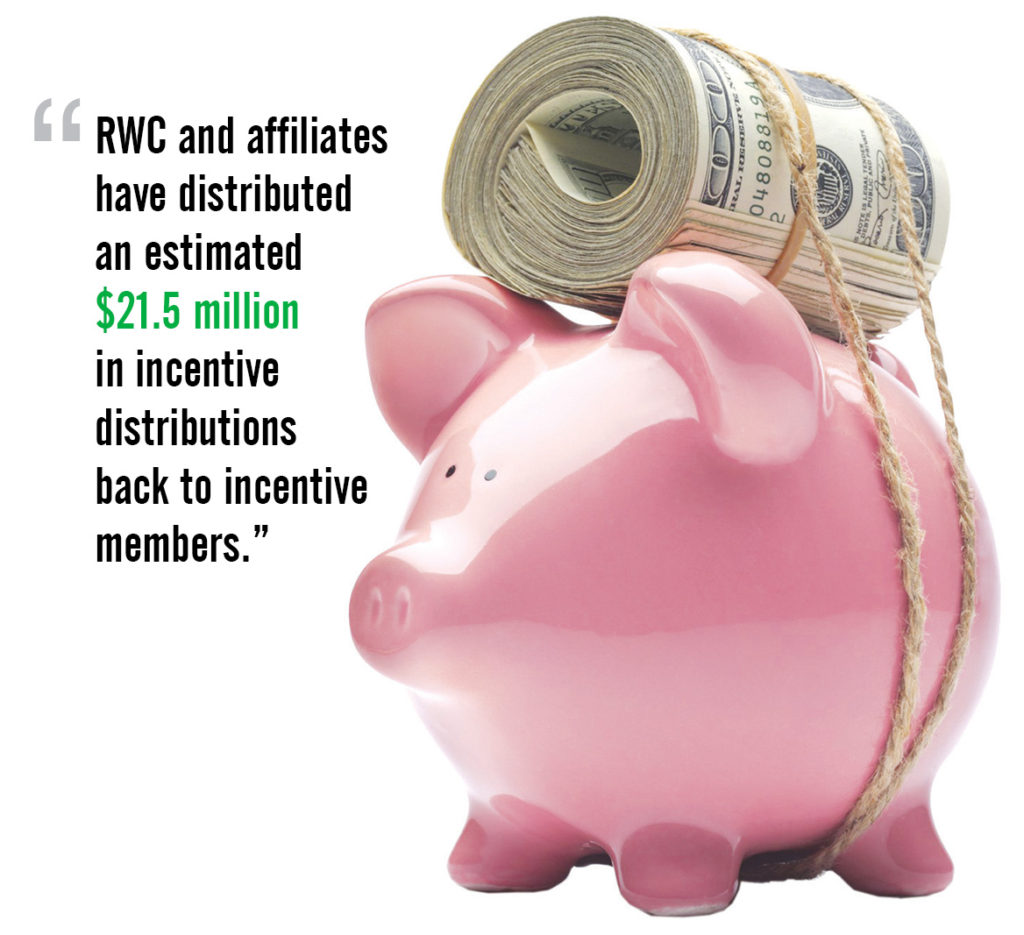
RWC established this program over 25 years ago as a way to reward our members for their good claims experience. Since then, RWC and affiliates have distributed $21.5 million in Incentive distributions back to Incentive members.
WHO IS ELIGIBLE?
A Member must enroll at least 20 homes per year or have an annual enrolled sales volume of $2 million. A free analysis illustrating how the Incentive Program can work for you is available upon request.
ADDITIONAL BENEFITS:
• The annual fee of $295 is waived for Incentive Members, saving an additional $1180 in years 2-5 of membership.
• The value of the Incentive distributions greatly reduces the effective cost of the warranty fee.
• The Member enjoys a locked-in enrollment rate under the standard program throughout the duration of their Incentive membership.
HOW DO I JOIN?
If you think your company will meet the eligibility requirements, call us to take the next step in building your own Incentive reward! Contact us at 800-247-1812, Ext 2149 or email sales@rwcwarranty.com.
RWC’s new home warranties are packed with “value added” features – features that provide heightened security, resale value, and an important measure of peace of mind for homeowners.
Yes, it’s essential that you have a strong home warranty under your belt to ensure home protection; but don’t just stop there. There are additional ways to ensure your home holds up over time, including seasonal maintenance inspections.
A part of being a responsible homeowner is checking on things before they go haywire. Inspecting your home on a regular basis and following good maintenance practices is one of the surest ways to keep your home happy all year long. Plus, these regularly scheduled seasonal maintenance inspections can help prevent costly problems from occurring.
If you haven’t completed your fall maintenance inspection, there’s no time like the present! Fall is the time to get your home ready for the coming winter, which is often the most grueling season for your home.
There are a number of indoor and outdoor maintenance tasks to complete each fall. 'Tis the season to service your heating system, check your chimneys and electrical systems, clean your chimneys, gutters and ridge vents, fortify your home’s exterior, check the batteries in your smoke alarms and carbon monoxide detectors, and so on. Though tempting, it’s important that you do not overlook these important tasks. If you do, you are likely to pay…literally. Plus, many of these items left undone can be major safety hazards.
For a complete fall maintenance checklist, we invite you to take a look at our handy resource.
And remember, if you don’t have the time or energy to conduct these periodic home maintenance inspections yourself, there’s always the option of paying someone to do the dirty work! Either way, it’s in your home’s best interest to get these seasonal items checked off your list of to-dos.
Questions regarding RWC’s home warranties? Don’t hesitate to contact us. Discover the value of an RWC homeowner warranty today!
RWC’s new home warranties are packed with “value added” features - features that provide heightened security, resale value, and an important measure of peace of mind for homeowners.
Yes, it’s essential that you have a strong home warranty in place to ensure home protection, but don’t just stop there. There are additional ways to ensure your home holds up over time, including seasonal maintenance inspections.
A part of being a responsible homeowner is checking on things before they go haywire. Inspecting your home on a regular basis and following good maintenance practices is one of the surest ways to keep your home in tiptop shape all year long. Plus, these regularly scheduled seasonal maintenance inspections can help prevent costly problems from occurring.
If you haven’t completed your summer maintenance inspection, there’s no time like the present! There are a number of indoor and outdoor maintenance tasks to complete each summer including repairing walkways and steps, painting, checking your chimney and roof, etc. Though tempting, it’s important that you do not put these important tasks off. If you do, odds are, you will pay...literally.
For a comprehensive summer maintenance checklist, we invite you to use this handy resource.
And remember, if you don’t have the time or energy to conduct these periodic home maintenance inspections yourself, there’s always the option of paying someone! Either way, it’s in your home’s best interest to get these periodic inspections done.
Questions regarding RWC’s home warranties? Don’t hesitate to contact us. Discover the value of an RWC homeowner warranty today!