
More than a century ago, Americans were fascinated by the speed and convenience of personal, motorized travel. Rather than feeding, housing and otherwise caring for horses that needed prepped for riding or drawing a carriage and would take a long time to get to their destinations, automobiles offered a vastly more convenient mode of transportation. In place of lining up for a spot on a crowded streetcar or feeding a horse that needed fuel to live and not just to carry its owner, car owners purchased gasoline that would be used only while the car was operated, and the car was always at the owner’s beck and call. There was no need to worry about illness or vet bills and no mucking of stalls. A car could be parked in front of one’s house, eliminating the need for a barn or a meadow where a horse could sleep and eat. The more urban car owner no longer had to race downtown to catch public transportation.
While that first generation of motor cars had many doubters, in less than a decade most people could see that automotive travel was the wave of the future. Nearly every household wanted a car. The problem was that few could afford to own one. In 1915, the average annual pay for a man was $687. The average pay for a woman was about half that. Meanwhile, a typical car cost $2,005, nearly three years wages for the average man. The disparity between what people earned and how much cars cost made it impossible for most Americans to purchase a car.
Some American entrepreneurs, recognizing the seemingly unquenchable thirst for cars in our country, searched for ways to satisfy that thirst while generating profits for themselves. Most prominent among them was Henry Ford. In 1913 and 1914 Ford put his assembly line into operation and worked to perfect it so that he could bring the reality of automobile ownership to the masses and make a killing for himself in the process. Already producing one of the more affordable everyman’s cars, the Model T, Ford’s assembly line lowered the cost of manufacturing that popular model by more than 65 %. Within a couple of years Ford had reduced the price of the Model T to $360. For nineteen years Ford manufactured the Model T and sold 15 million of them, which was half of the automobiles manufactured in the world during that time.
Today there is a housing shortage in our country that has been forming for more than a decade. Following the boom-and-bust cycle that ended in 2008, the United States had an excess of available housing. Then, as the new home construction industry reeled from the aftereffects of the bust, builders were not able to keep up with the rising demand for new homes. Indeed, from 2012 to 2022, 6.5 million more households were formed than new homes were built. The Covid-19 pandemic and the financial and labor issues that flowed from it have only exacerbated the problem. Housing experts estimate that the shortage of available housing today approaches seven million homes. Not only are builders not building enough homes, but potential buyers are finding it difficult to afford the homes that are being built.
More than a century after Henry Ford revolutionized the auto industry by mass producing the Model T,there is another seemingly unquenchable thirst in our country—not for cars this time, but for homes. Ford designed a car for the masses and figured out a way to spend less in the manufacturing process and thus was able to meet his customers at a price point they could afford. We believe today’s builders can take a similar approach to quenching America’s thirst for housing.
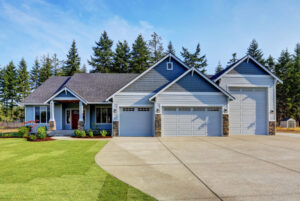
Seniors who are downsizing and younger first-time home buyers want homes with a smaller and cozier footprint than they did a generation ago. Homes built in clusters in mixed use developments are more popular now with some buyers than the large single-family homes with half acre lots that dominated the market twenty years ago. Smaller homes with simpler layouts and roof designs on smaller lots could be the product that not only appeals to more of today’s buyers, but also can be afforded by today’s buyers. Like Ford’s Model T, these homes could be the backbone of any builder’s inventory.
Affordability was only one reason for Henry Ford’s triumph. Another was a leaner and more cost-effective method of manufacturing his cars. The manufacture and use of modular housing components is one way a builder can reduce costs. Another is the repetitive design of, for example, row homes. The row functions like an assembly line, except that the tradesmen move along the row rather than the items to be worked on passing in front of them.
 There is a thirst in the land for affordable housing. Whether using Henry Ford’s ideas, some of ours, or better ones, we know that our member builders will quench that thirst and provide another generation of Americans with high quality and affordable new homes. When those homes are built, do yourself and your buyers a favor and place an RWC warranty on every home you sell.
Over nearly four and a half decades RWC has provided warranty protection on more than four million homes. We offer a wide variety of warranty options like our standard ten-year warranty, our Day 1 coverage warranty, our extended appliance and system warranties, and our specialty warranties for remodeling projects, detached garages, and commercial construction. Only RWC has developed and offers its members a customized state warranty that mirrors each state’s statute of repose and accommodates other state specific issues. All RWC warranties provide clear performance standards that help create realistic homeowner expectations and provide a road map to resolve even the stickiest customer complaints.
At RWC, every guarantee our warranties make is backed by Western Pacific Mutual Insurance Company, RRG. Western Pacific has an "A- (Excellent)"rating from A. M. Best and only insures home warranty and similar new home construction risks, like builders’ general liability, which can be offered through the RWC Insurance Advantage program to RWC members. No other warranty company has an insurer with this kind of strength solely dedicated to covering builders and their homes.
There are a lot of thirsty homebuyers waiting out there for you. Go build their homes and leave your warranty concerns to us. We’ve got you covered!
Have a great fall and winter!
Extended warranty coverage on appliances and systems is an excellent approach to add an extra level of protection to the homes you build. Even brand-new appliances can sometimes be unreliable, and our aim is to ensure both you and your buyers feel more at ease and have heightened confidence in their new home.
Did you know that as a member of the RWC warranty program, you are automatically approved to offer your homeowners our Key Estates Extended Warranty without paying additional membership fees. And best of all, you can start enrolling homes today at www.KeyEstatesWarranty.com/builders.
Buyers want a worry-free living experience, especially in a brand-new home, so if a covered item fails, Key Estatehttps://www.rwcwarranty.com/builders/key-estates/s will be there to ease the financial burden of repair or replacement.
You'll find we do a few things differently than the other warranty folks. For example, coverage is flexible, there are no black out areas, and homeowners can use the repair provider of their choice to perform service work if needed. We do not force them to choose from a limited pool of technicians.
Our extended warranty benefits you as a builder, too, by enhancing your reputation and credibility. Offering a high-quality, affordable warranty shows your commitment to long-term value. Plus, when issues arise post-settlement, homeowners contact Key Estates directly—not you—so we help take those post-sale hassles and concerns off your plate. Peace of mind for homeowners means more signed contracts for you.
Feel free to contact your Account Executive with any questions, call 866-394-5135 x2188, or email sales@KeyEstatesWarranty.com.

Reprinted from nahb.org
Nearly all construction sites have unprotected sides and edges, wall openings or floor holes at some point, which pose a hazard to the workers moving around the jobsite. These openings and sides MUST be protected with guardrails or covers.
Safe Work Practices:
- Guardrails must always be installed around openings in floors, and across openings of walls and windows greater than 18", when the work area is 6 ft. or more above a lower level.
- For window openings with a 6 ft. fall hazard, guardrails must be installed if the bottom sill height is less than 39".
- A complete guardrail system consists of: 1) a top rail; 2) a midrail; and 3) a toeboard.
- Install top rails at 42" high, with midrails placed halfway between the top of the guardrail top rail and the floor or walking/working surface.
- Install toeboards a minimum of 4" along the edge of the walking or working surface to protect from falling debris and objects, such as tools or materials.
- Any stairway with four or more risers or a height of more than 30" must be protected by a guardrail system, also known as stair rails.
- Any 2" or greater opening in the floor must be protected and covered.
As a builder, you are responsible for providing your clients with something that is arguably one of the most important components of their lives - their home. So, it naturally follows that the company you choose to have your back would need to be stable. Reliable. Honest. Transparent. You would expect to not only receive a proven warranty that comes with unparalleled protection and customer service, but also to be kept apprised of the inner workings of the company providing it. Because if there is anything life has taught us over the past few years, it is that not all surprises are good ones, and knowledge is crucial to keeping your own business running on an even keel.
Residential Warranty Company, LLC (RWC) has been and remains a family organization since our inception, never having changed hands since the doors first opened in 1981. This is something we cannot say about our biggest competitors who have chosen a different path from large corporate overreach. In an incorporated and automated world, we believe a little personal attention goes a long way.
We have maintained that belief for over 40 years in the business, making us one of the oldest and largest names in the industry, providing a strong foundation of security. We know that one size doesn’t fit all, so we offer a wide range of home warranties and services through a network of affiliated companies. This means you get comprehensive coverage and effective risk management tailored to your needs. Additionally, our insurer has held an “A- (Excellent)” rating by A.M. Best since 2001 and has over $130 million in surplus equity.
Perhaps most importantly, when you join us, you are not simply a customer. You are family. So, we invite you to come and knock on our door. We are always waiting for you.
 Recently the New Jersey Department of Community Affairs informed Residential Warranty Company, LLC (RWC) that we are responsible to verify ownership of the new home that is being sold to the new home owner(s) in the state of New Jersey, before issuing any warranty paperwork. This requirement is per Directive 15, dated June 26, 2018.
The directive indicates that we can accept a copy of the contract for sale or a copy of the deed. A construction contract may be used when there is no transfer of title. This is typical when the homeowner owns the land and contracts with a builder to build a new home for his or her own personal use and occupancy.
Effective May 1, 2024, RWC will require this proof before issuing the NJ Affidavit to obtain your Certificate of Occupancy, the RWC Application for Enrollment form, and Limited Warranty booklet. Warranty Express will have an option for you to upload these documents or they can be emailed to NJDocs@RWCWarranty.com
Any questions should be directed to Ron Sweigert at 800-247-1812, x2178.
NAHB, a leader in safety and health education and compliance assistance for residential construction, has released a new mobile tool called the NAHB Jobsite Safety Handbook. This application — available in both the Apple and Google Play app stores — was built to help home builders, contractors, and workers identify safe work practices.
This app covers the main safety issues residential builders and trade contractors need to focus on to reduce worksite accidents and injuries. Information is meant to provide a basic guide to understanding and conforming with the federal safety and health requirements of the Occupational Safety and Health Act and OSHA standards and regulations.
The app features resources for both classroom learning and on-the-job compliance, such as NAHB’s full Jobsite Safety Handbook, more than 50 safety video toolbox talks, all NAHBNow safety content, and an interactive quiz for users to test their safety knowledge. The app’s content is available in 15 languages.
This handy new app is a great tool for home builders and managers to engage workers onsite. Use the video content during safety stand downs on specific topics, or have new employees or trades take a “pop quiz” on jobsite safety in the app.
The NAHB Jobsite Safety Handbook app is free to download for both members and non-members.
 Millennia ago when solar eclipses caused the world, or at least the little piece of it occupied by a primitive culture, to slip into darkness as the sun disappeared in the middle of the day, ancient man often saw it as a mystical battle among gods or as an omen of bad times to come. Ancient Chinese believed that a dragon had attacked and devoured the sun. In India, a common belief was that a demon named Rahu disguised himself as a woman for the purpose of crashing a banquet of the gods, where he hoped to drink all the gods’ nectar. A major god Vishnu caught onto Rahu’s plan, cut off his head and hurled it across the sky. Ancient Indians believed that it was Rahu’s decapitated head that blocked out the sun. According to a Native American Choctaw legend, a mischievous squirrel gnawed on the sun, which caused it to slowly disappear.
The reactions to eclipses by our early forebears were even more bizarre than their explanations for the celestial events. Mayan rulers would cut themselves, collect their blood and offer it as a sacrifice to whichever god needed placated. Aztecs would become hysterical and sacrifice the people among them with the fairest hair and the lightest skin, which they believed kept demons from descending from the sky and eating everyone. In Mesopotamia and in Greece, after having developed the ability to predict that an eclipse was coming, the king would place an imposter on the throne as a decoy to fool the gods and keep any bad omens from affecting the real king. When the eclipse passed, the imposter was usually killed.
Even those cultures who did not engage in barbaric practices like blood-letting and human sacrifice saw eclipses as omens. As late as 1598, when William Shakespeare wrote King Lear, the king remarked that “these late eclipses in the sun and the moon portend no good to us.” This was the view of most societies since the beginning of time. There were exceptions like the Batammaliba people of West Africa, who believed that the eclipse occurred because the gods were angry with people for fighting with each other. During and after an eclipse, villagers would put petty arguments aside, stop fighting with their neighbors, and even give each other gifts.
The recent solar eclipse that carved a path of totality across the United States demonstrates how far modern man has come in his understanding of the universe. Many years of observation and study allow us now to predict not just when an eclipse will occur, but also how much of the sun will be blocked by the moon in any location around the globe. Thus, some of our friends and co-workers left our home office where there was about 92% coverage of the sun to travel to Cleveland and to eastern Indiana, where they were able to watch the total eclipse. All who chased totality mentioned how awe-inspiring an experience it was.
Rather than fearing and overreacting to an eclipse like ancient man did, 21st Century Americans can plan for, travel to, and embrace a total eclipse for what it is--an awesome display of the universal and physical principles by which our universe works. And we can do that because for centuries mankind looked at the sky, asked questions about what was happening, and eventually figured it out through hard work and study.
This same principle applies to business, and particularly to the business of home building. We have heard friends oversimplify it this way: “You build a home and sell it for more than it cost to build.” Those folks might just as well believe that a squirrel ate the sun on April 8th or that the fender-bender they had last week was foretold by the eclipse. We know better. But do we know enough or all that we can know?
Just like the astronomers and physicists who figured out solar eclipses, every builder should look at his company’s universe and ask hard questions. What kind of homes are people buying now? What are people likely to buy five years from now? What can my potential clients afford to build? Will the price of timber rise or fall in the next year? How will interest rates and the cost of financing affect sales over the next eighteen months? Is the population in my area aging or getting younger on average, and how will that affect my customers’ housing choices? Big houses or small houses? Singles or towns? Town or country?
 You get the idea. By asking and answering these kinds of questions, any builder will gain a better understanding of his business and its challenges and will increase his profitability. A good project is to write out twenty such questions (or as many as you can think of) and then put in the study, thought and effort necessary to answer them. We think you will enjoy and benefit from the project. (And you better get to it soon before that squirrel gobbles up the sun!)
If one of the questions you ask yourself is, “How can I best protect my customers and my company from construction defect claims?”, we have the answer for you. Place an RWC warranty on every home you build.
In our more than four decades of home warranty experience RWC has covered more than four million homes. We offer a wide variety of warranty options like our standard ten-year warranty, our Day 1 coverage warranty, our extended appliance and system warranties, and our specialty warranties for remodeling projects, detached garages, and commercial construction. Only RWC has developed and offers its members a customized state warranty that mirrors each state’s statute of repose and accommodates other state specific issues. All RWC warranties provide clear performance standards that help create realistic homeowner expectations and provide a road map to resolving even the stickiest customer complaints.
At RWC, every guarantee our warranties make is backed by Western Pacific Mutual Insurance Company, RRG. Western Pacific has an A- rating from A. M. Best and only insures home warranty and similar new home construction risks, like builders’ general liability, which can be offered through the RWC Insurance Advantage program to RWC members. No other warranty company has an insurer with this kind of strength solely dedicated to covering builders and their homes.
Don’t be eclipsed by your competitors. Give your customers the best warranty under the sun—an RWC warranty.
Have a wonderful Summer!
The building sector in New Jersey is undergoing a dramatic transition in 2024, one that is focused more on innovation, sustainability, and community-centered development. Statewide, developers and architects are adopting a number of ideas that are changing both the built environment and how people live and work.
 The use of green building techniques has made sustainability a prominent theme in architectural design. Buildings are being constructed with the least amount of negative environmental impact and maximum energy efficiency in mind. This covers passive design principles and the use of environmentally friendly materials.
Smart building technologies are at the forefront of innovation and have fundamentally altered the way buildings work. By optimizing energy consumption, enhancing security, and improving occupant comfort, IoT devices and advanced automation systems are helping to create more responsive, efficient, and user-friendly buildings.
Mixed-use developments—which combine residential, commercial, and recreational spaces—are growing in popularity, especially in urban areas. With the help of these projects, communities will be able to live, work, and play close to one another, promoting convenience and a sense of community.
The growth of adaptive reuse projects, which entail converting pre-existing buildings—such warehouses and factories—into new spaces like lofts, offices, or cultural centers, is another noteworthy development. By preserving the architectural history of the past and meeting modern needs, these initiatives help to preserve the uniqueness and individuality of the local community.
All things considered, these architectural innovations demonstrate a dedication to creativity, environmental responsibility, and neighborhood involvement, influencing New Jersey's construction scene going forward.
The days of supply chain shortages may be in the rearview mirror, but a new challenge now plagues the construction industry - an increasing lack of skilled construction labor. To meet market demand, the construction industry needs approximately 723,000 new workers each year. The number of open construction sector jobs currently averages between 300,000 to 400,000 every month.
Home Builders Care, the charitable arm of the Home Builders Association of Central Arizona, recently opened the Home Building Academy in Phoenix. Here students participate in a nine-week, rapid worker training, resulting in industry-recognized certificates in either carpentry or electrical work. The academy is tuition-free for qualified students, and students maintaining “satisfactory” academic progress will receive a weekly stipend for living expenses. Successful graduates will also receive a set of tools, boots, work clothes, and personal protective equipment.
 But is simply providing the avenue of study enough of a draw to the next generation of potential contractors? To answer that question, one must understand the mindset and motivations of the Millennial and Gen Z generations. They are digital natives who grew up with the internet and technology and are used to constant stimulation and fast-paced living. They also value work-life balance, diversity, and flexibility in the workplace, and seek to make a social impact through work. They expect employers to care about their well-being. Diversity, equity, and inclusion (DEI) are important. To attract and retain the next generation of workers, companies must take steps to adapt their workplaces and recruiting practices to meet these needs and values.
A company’s brand and reputation can be just as important as its salary or benefits. While a company can have a fantastic reputation with clients, it’s irrelevant if young workers don’t have the same perception. If they feel like it’s not keeping up with modern trends or providing them with the opportunity to make an impact, they may be less inclined to work there. To overcome this barrier, companies must take a proactive approach to build a positive market reputation and brand. This may involve volunteer projects, community partnerships, social media presence, or other marketing initiatives highlighting the company’s values and commitment to progress.
Young workers are drawn to companies that have transparent, inclusive cultures where employees feel valued and respected. One way to create this type of workplace is by investing in opportunities for professional development. For example, offering classes on topics like leadership and management, communication, digital technologies, or DEI. Allowing workers to develop their own ideas and solutions can also help foster a sense of belonging, ownership, and engagement in company culture.
Today’s young workers also seek companies that can provide career growth and development opportunities. They need to know that their job is important to the company’s success and that they’re not just a number. Offer mentorship, growth, and development opportunities such as hiring or promoting individuals with knowledge and expertise in a certain area, pairing young workers with more experienced employees, or offering training workshops to improve their skills and help them advance in their careers.
And, let’s face it, money is always a huge motivating factor. No one is looking to work for free, and if compensation or benefits packages don’t meet expectations, employees are quick to leave. At a minimum, to attract a young construction crew, a company should be offering competitive base salaries and benefits packages. This may include things like health insurance, paid time off, and retirement plans. Disability and life insurance and other perks, such as gym memberships, health and wellness programs, or free lunches, are another way to set a company apart.
Millennials and Gen Zers are tech-savvy and expect construction companies to be as up-to-date and innovative when it comes to technology, just as they are in other industries. The construction industry is often slow-paced when it comes to adopting new technologies, but if they want to attract and retain the best young talent, they need to start investing in technology that will help them stay competitive.
Then there is the actual hiring process - most construction companies rely only on traditional recruitment methods, such as job boards or recruiting agencies. But the reality is that only a fraction of available talent will appear on these lists - and they may not be the best candidates for a company. To attract and retain young workers, a more proactive approach needs to be taken. Build relationships with local universities and colleges, offer internships, co-op programs, or attend job fairs. Use social media platforms like LinkedIn, Twitter, Facebook, or Instagram to engage with potential candidates and share information about company culture and opportunities. Host recruitment events or offer internship programs to connect with young workers and give them a chance to see what working in construction is like.
Attracting and retaining construction workers has never been easy. But by focusing on the needs and preferences of younger workers, investing in a company’s culture and workplace environment, and actively reaching out to potential employees helps the industry build a strong team of young talent that will help an organization thrive for years to come.
The Kevin Costner film, Field of Dreams, is a favorite movie of sports fans, and of baseball fans, in particular. Based on W. P. Kinsella’s novel, Shoeless Joe, the movie follows the struggles of an Iowa farmer, Ray Kinsella, who tries desperately to wring enough money from his farm to keep the lenders who hold the mortgage on it at bay. He begins to hear a voice saying, “If you build it, he will come.” He wonders if the voice is a dream, a symptom of a psychological problem, or the deliverer of an important message to him.
 Ray’s wife Annie, played admirably in the movie by Amy Madigan, wonders, too. She listens to her husband describe the voice and the other messages it conveys: “Ease his pain”; and “Go the distance”. Then Ray sees a baseball field in the middle of his corn and an apparition of the long-dead Shoeless Joe Jackson, who was a great player from the early twentieth century and who was his father’s favorite player, standing in the middle of the imaginary baseball diamond. He feels called to construct the field, and despite her concerns about her family’s security and her worries that they may soon lose their farm to creditors, Annie accedes to his plan to build the ball field.
Shoeless Joe and his teammates, who were banned from baseball for fixing the 1919 World Series, begin showing up and playing on Ray’s field. They seem to enjoy themselves, but Ray has trouble understanding how he fits into the picture. At a school board meeting, Annie argues against a group of parents who seek to ban books from the school’s library, particularly the books of Terrence Mann, who is a favorite author of her husband’s and hers. Ray then remembers a reference in one of Mann’s books to a baseball player named Kinsella and takes this as a sign that Terrence Mann might have the answer to what Shoeless Joe, the voices, and the field might mean for Ray Kinsella.
Costner’s character travels across the country to Boston and brings Terrence Mann, played wonderfully by the great James Earl Jones, back to his farm. Ray is still unclear about what is in it for him, but Shoeless Joe provides the answer. As the players are wrapping up their game and heading back into the cornfield where they magically disappear each night, he says to Ray, “If you build it, he will come”, and he nods toward a catcher who is removing his gear and staying behind. As Shoeless Joe disappears into the corn, Ray realizes it is the spirit of his father.
Later, still worried about the fate of his family and farm, Ray looks to Terrence Mann for assurance. Mann explains that the field will be an attraction that people will pay to see, and in the best lines of the movie, Mann assures him that, “People will come, Ray. People will most definitely come.” The movie ends with a scene of a road full of cars driving up to the Kinsellas’ cornfield that has become a field of dreams.
But why are we recounting this movie to you? First, it’s a great movie, one of our favorites. If you haven’t seen it, you should. If it’s been a while since you saw it, we recommend that you watch it again. This time, though, think about the voice, and what that iconic line, which we paraphrase here, might mean to your building business.
If you build it, they will come. “They” means your future customers, and the “it” is not a cornfield in Iowa. In this context the “it” is the kind of home your future customers are looking to buy.
It’s easy to get in a rut and stay with a product that has been successful in the past, even after that product is no longer as popular as it once was. The auto industry has experienced this with some regularity. Large cars with big fins were replaced by sportier models with big engines that eventually were replaced by aerodynamic fuel-efficient vehicles. Station wagons gave way to vans that gave way to SUVs, and gas guzzlers are being replaced by hybrids and electric cars. Nearly every industry goes through this, and the homebuilding industry is no exception.
Today’s new home buyers are different from the ones twenty, ten or even five years ago. The Covid pandemic has caused some of the open floor plans of recent years to give way to more private spaces in houses to allow for home offices and quiet places for students to attend class remotely. The new generation of homebuyers (under the age of forty) are placing added emphasis on patios and see the kitchen island, with its ability to serve the multiple purposes of additional workspace, a makeshift breakfast bar, and added storage, as more of a necessity.
Affordability is even more important to today’s new home buyers. In September 2023, the annual median new home price dropped by the largest amount since 2009, with most homes selling in the $150,000 to $499,999 range. Following a stretch of high inflation and with interest rates hovering near a twenty year high, many prospective new home buyers cannot afford to pay as much for a house as they might have paid two or three years ago.
To have more success and to gain an edge on your competition, it is a good idea to study what prospective buyers in your market want and then deliver that product at a price those prospects can afford to pay. If you do that, the people will come. They will most definitely come. And they will buy your houses.
Another way to gain an edge on your competition and to give your homebuyers and you peace of mind is to place an RWC warranty on every home you sell. When you do that, you can be confident that your homebuyers are in good hands and that any construction defect claims they have will be handled with the utmost care and professionalism.
In our more than four decades of home warranty experience RWC has covered more than four million homes. We offer a wide variety of warranty options like our standard ten-year warranty, our Day 1 coverage warranty, our extended appliance and system warranties, and our specialty warranties for remodeling projects, detached garages, and commercial construction. Only RWC has developed and offers its members a customized state warranty that mirrors each state’s statute of repose and accommodates other state specific issues. All RWC warranties provide clear performance standards that help create realistic homeowner expectations and provide a road map to resolving even the stickiest customer complaints.
At RWC, every guarantee our warranties make is backed by Western Pacific Mutual Insurance Company, RRG. Western Pacific has an A- rating from A. M. Best and only insures home warranty and similar new home construction risks, like builders’ general liability, which can be offered through the RWC Insurance Advantage program to RWC members. No other warranty company has an insurer with this kind of strength solely dedicated to covering builders and their homes.
Here’s hoping you continue to dream big and that you choose to go the distance with RWC by your side. Have a great winter!