
The 2026 International Builders’ Show (IBS) in Orlando proved once again why it remains the premier event in the residential construction industry.
This year, 13 members of our team traveled from across the country to represent RWC, HOME, and its affiliates at IBS. With 75,000 attendees at IBS and an impressive 117,000 combined attendees alongside KBIS, the scale and opportunity were undeniable.
Our booth activity was nothing short of electric.
We acquired hundreds of qualified builder leads, driven largely by our new interactive attractions. The debut of our Putt-Putt Plinko game was a true showstopper. It quickly became a sensation on the floor—drawing passersby in to test their luck for a chance to win prizes, including $50 cash on the spot. The generosity caught many attendees by surprise and created an atmosphere of excitement and appreciation.
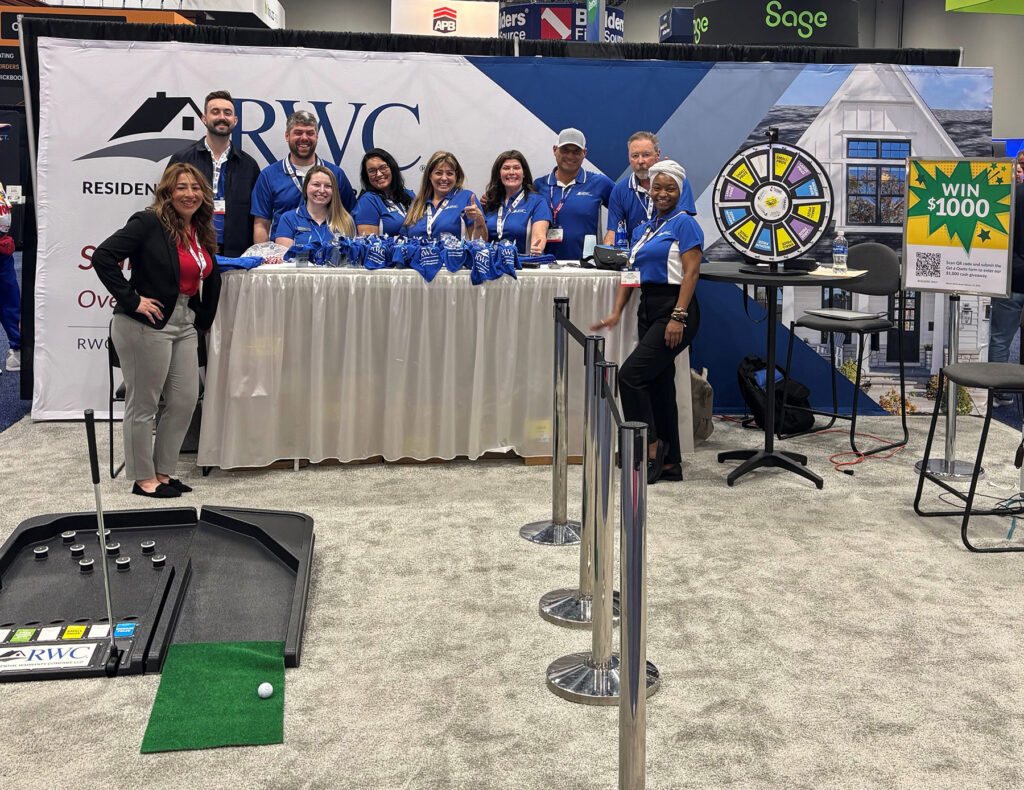
In addition to daily prizes, we gave away a $1,000 cash prize to a qualified builder lead, which was ultimately won by Kauffman Builders of Indiana. Moments like that created buzz, drove meaningful conversations, and reinforced our brand as both engaging and builder focused.
Attendees visiting the booth also received fun promotional items and the opportunity to join our warranty program with either 50% off or a free discount incentive—a compelling offer that generated strong interest and valuable conversations.
From setup to breakdown, our team operated like a well-oiled machine. Aside from occasionally navigating the maze of a show floor still under construction, execution was seamless. Collaboration, professionalism, and hustle were on full display all week.
It wasn’t all business. One of the highlights of the week was our team dinner, where we celebrated year-end achievements and recognized top performers and 2025 Account Executives of the Year.
2025 Account Executive Awards:
Freddy Pesqueira – 3rd Place
Tiaira Satchell – 2nd Place (her first recognition in this category — a huge accomplishment)
Staci Cool – Account Executive of the Year
Recognized for her consistent production, professionalism, and willingness to go above and beyond the scope of her role.
Celebrating these accomplishments together reinforced the strength of our culture and the talent within our organization.
The IBS House Party brought the team together for drinks, great food, live music, and some very entertaining bull riding — with RWC proudly represented in the action.
Some team members even braved the carnival swing ride soaring several hundred feet in the air, while others formed what can only be described as an Orlando scooter gang, buzzing through the city streets on Electric Lime scooters.
It was the perfect blend of hard work and camaraderie.
IBS 2026 was both fun and highly productive. The connections made, the qualified leads generated, and the brand presence established will undoubtedly translate into meaningful new business for RWC in the months ahead.
Just as importantly, the experience strengthened our team and reinforced the culture that drives our success.
Next stop: Las Vegas for IBS 2027.
By: Rich McPhee, National Sales Manager
In an era where design trends are relentlessly future-focused, it’s easy to overlook the charm and character found in older homes. Many traditional design elements tell the story of a space—adding warmth, history, and personality that new builds often lack. Rather than phasing these details out, thoughtfully embracing them allows timeless features to shine for generations to come. Here are several heirloom elements worth preserving and reimagining.
Coffered Ceilings
Coffered ceilings are an ornate architectural detail that instantly elevates the look and feel of a room. By adding depth and dimension overhead, they bring visual interest and character to an often-overlooked surface. While traditional designs typically feature an all-white palette, leaving beams in a natural wood finish or painting within the panels opens the door to endless design possibilities.
Glass Doorknobs
Glass doorknobs became common across the United States after the start of World War I, when metals traditionally used for hardware were redirected to support the war effort. Beyond their historical significance, glass doorknobs are both beautiful and surprisingly durable—making them a distinctive detail that blends form and function.
Antique Mirrors
Mixing antique pieces with modern design elements creates striking visual contrast. An antique mirror paired with contemporary furnishings, for example, can become a focal point that adds depth, elegance, and a sense of history to the space.
Archways
A hallmark of older homes, archways provide a graceful transition between rooms. By softening sharp corners, they introduce a classic charm that feels both welcoming and refined. While many modern homes rely on square door frames, incorporating an archway instantly sets a space apart.
Transom Windows
Transom windows are positioned above doors or windows to encourage natural light and airflow throughout a home. In addition to their practical benefits, they serve as beautiful architectural accents that enhance the overall design.
Antique Light Fixtures
Introducing an antique light fixture—such as a pendant or chandelier—into a contemporary room adds instant character. These statement pieces often bring a touch of Art Deco glamour and serve as eye-catching conversation starters.
Dutch Doors
Originally developed in the Netherlands, Dutch doors were designed to keep children indoors and animals out while allowing fresh air to circulate. Today, their split design remains both charming and functional, offering a unique and welcoming entry point.
Pocket Doors
Pocket doors are a space-saving solution that slides neatly into the wall rather than swinging open. Common in older homes, they’re especially practical in tight spaces while maintaining a clean, streamlined look.
Mosaic Tile
Mosaic tile is a beautiful way to nod to classic design while embracing modern style. When paired with contemporary cabinetry or updated color palettes, it adds texture and elegance without feeling dated.
Doorknockers
Before doorbells, guests announced their arrival with a doorknocker. These decorative elements come in a wide range of shapes, sizes, and designs, making them an easy way to add personality and curb appeal to your front door.
Butler’s Pantry
Traditionally used to store valuable serving pieces such as silverware and china, butler’s pantries were once secured spaces overseen by household staff. Today, they’ve evolved into multifunctional areas often featuring additional storage, cocktail stations, and prep sinks—blending old-world luxury with modern convenience.
Built-In Bookshelves
Built-in bookshelves add instant charm while maximizing storage. Whether displaying books, decorative objects, or personal keepsakes, they bring both beauty and practicality to living spaces.
Wainscoting
Originally designed to protect walls from scuffs and dirt, wainscoting has become a timeless decorative feature. Available in a variety of styles and patterns, it adds texture, depth, and elegance to any room.
Wood-Burning Fireplaces
Before the advent of central heating, fireplaces were essential for warmth. Today, a wood-burning fireplace remains both functional and atmospheric, offering a cozy ambiance—and a nostalgic aroma many homeowners love.
Stained Glass Windows
Stained glass windows were a staple in many older homes and continue to be breathtaking design elements. They infuse spaces with color, light, and a strong sense of history, making them a stunning addition even in modern builds.
Clawfoot Tubs
Clawfoot tubs are a beloved bathroom feature known for their timeless appeal. Often crafted from cast iron, they’re built to last and add undeniable character. For a modern twist, consider painting the exterior in a bold or unexpected hue that complements your style.
In the little towns where we grew up, homeowners, like our parents, knew the people to hire if their home needed repairs or modifications. There was Mr. Allen for sidewalks and other flat work. Mr. Teufel was the man to call if you were replacing wallpaper, especially if the work was needed in your foyer or living room. The Wilson brothers were best for roofs, and if a ball had been thrown through a window, they would hire Mr. White, if they could get him. Often the deciding factor on whether to retain any of these gentlemen was not dependent on price, but on how soon they could come and do the work. They were all in demand because they were known to be craftsmen whose work was usually worth the wait.
Another such craftsman we were lucky to know personally was the carpenter, Mr. Nonemaker, or as we knew him, our great uncle Bill. He was a master cabinet maker who could remodel kitchens and fix anything, but more impressively to us at the time, could convert any dark or creepy basement that did not have a dirt floor into a rec room where countless hours of pool or ping pong would be played. For livelier and more well-heeled customers, he would add a bar, and perhaps a powder room. He was careful and methodical in his work and liked to fish a lot (and drink a bit), so sometimes his projects would take a while to complete. But he was worth waiting for. He loved when customers would tell him that friends and neighbors who were invited for the first time to the rec room or remodeled kitchen would run their hands along cabinets, drawers and seams before asking, “This is Mr. Nonemaker’s work, isn’t it?”
Times have changed, of course, with the big box hardware stores dotting the landscape and DIY “experts” populating You Tube with How-To videos. And that’s a shame because, while people might be getting their home repairs done more quickly and on their own time and money terms, they do not get to appreciate the product that was delivered by the Mr. Whites, the Wilson brothers, or the Uncle Bills we remember from just a few decades ago. Richard Sennett, the renowned American sociologist who studies work in modern culture, distinguishes mere work from craftsmanship and describes craftsmanship as “the desire to do a job well for its own sake.” White, the Wilsons, and Uncle Bill were not mere workers. They were craftsmen who took pride in their work, as if it were an art form.
With building supply prices near all-time highs and with pressure from buyers pushing housing prices downward, builders face pressure to keep their costs down. But just as it was decades ago, people will pay for quality and for a home they can take pride in, and nothing makes a homeowner prouder of his home than when people notice the craftsmanship that went into building it. A good way to distinguish your company from your competitors is to insist that your employees and subcontractors who are in the trades not just build to code but build with a level of craftsmanship that gets noticed and is appreciated by your customers and prospective customers.
You may think this suggestion is crazy given the reported shortage of skilled home building labor. This shortage is well documented in a study released by the Home Builders Institute earlier this year. According to the HBI, the aggregate economic impact from longer construction times associated with the skilled labor shortage costs the industry an estimated $10.6 Billion each year. The shortage also results in a reduction of nearly 20,000 homes built per year and an average increase in construction time of about two months per home built. In light of these findings, the NAHB and the HBI are supporting hands-on training programs and industry-recognized certifications to help produce a new generation of skilled laborers.
Recognition of this problem and an industry-wide effort to address it could not come soon enough. Here at RWC, for the first time in forty years, we have noticed an uptick in workmanship claims dating back to the Covid pandemic. Some builders in some parts of the country seem to have trouble finding subcontractors and skilled laborers who have and demonstrate the pride of a craftsman in their work. We believe each of our members, following the lead of the NAHB, can either rid themselves of this problem or make sure they don’t experience the problem in the first place in the following ways.
First, find young people (male and female) who are looking for a rewarding career that gives them the opportunity to do something they can be proud of. Start with vocational schools or check your local high schools for career pathway programs that team with employers to give students shadowing and interning opportunities. Throughout the process of exposing students to your operations, plant the seed early that your company is a place for craftsmen, that working there will be different from working other places, and that you want your whole team to take pride in what they do. If the articles we read about the expected growth of Artificial Intelligence can be believed, there will be many fewer entry-level white-collar jobs available to young people over the next decade. Get your recruitment plan ready now and grow that next generation of craftsmen from what may be an expanded pool of candidates.
Second, train your new employees and subs not just to build to municipal code standards, but to build to your company’s standards. Set that bar high enough that people, after seeing the high level of craftmanship in any of your homes, will turn to the owner and ask, “This is (Your Company’s) work, isn’t it.”
Third, if all goes according to plan, your skilled workers will improve your company’s reputation, increase sales, and even allow you to charge more for your homes. Share your good fortune with them. Pay them what they deserve, like craftsmen, who “do a job well for its own sake,” and thus keep them building for you and not for your competitor.
We believe that if you follow this plan, you will become even prouder of the homes you build, and you’ll sell more of them. And when you do, make sure that each and every one of your homes are covered by an RWC new home warranty.
Over more than forty years, RWC has provided warranty protection on over four million homes. We offer a wide variety of warranty options like our standard ten-year warranty, our Day 1 coverage warranty, our extended appliance and system warranties, and our specialty warranties for remodeling projects, detached garages, and commercial construction. Only RWC has developed and offers its members a customized state warranty that mirrors each state’s statute of repose and accommodates other state specific issues. All RWC warranties provide clear performance standards that help create realistic homeowner expectations and provide a road map to resolve even the stickiest customer complaints.
At RWC, every guarantee our warranties make is backed by Western Pacific Mutual Insurance Company, RRG. Western Pacific has an A- rating from A. M. Best and only insures home warranty and similar new home construction risks, like builders’ general liability, which can be offered through the RWC Insurance Advantage program to RWC members. No other warranty company has an insurer with this kind of strength solely dedicated to covering builders and their homes.
Like the skilled craftsmen you know, we at RWC take pride in our work and try to do every job well, just for the sake of doing it well. Help us put that attitude to work for you by placing an RWC warranty on every home you build.
Have a great fall & winter!
Construction site weather preparation is essential for keeping things safe and on track. Below are a few tips to review with your team to keep your project running smoothly.
- Assess Vulnerabilities - Walk your job site to identify weather risks.
- Stay Updated on Forecasts - Make checking the forecast a daily routine.
- Define Clear Roles and Communication - Ensure everyone knows their responsibilities when bad weather approaches.
- Secure Everything That Can Move - Board up openings to prevent wind and rain damage. Check tie-downs and anchors.
- Manage Water Flow and Pooling - Control where water goes to prevent flooding and minimize damage. Have pumps ready. Cover trenches, and foundation areas.
- Take Care of Your Equipment - Park equipment away from hazards like large trees, unstable slopes, excavation edges, or overhead power lines. Ensure fuel tanks are topped off before a major storm. Cover sensitive electronic components.
- Keep Documents Safe and Supplies Stocked - Protect critical documents like blueprints, permits, contracts, and inspection reports from water damage. Store hard copies in waterproof containers and keep digital copies backed up.
- Dealing with the Aftermath - Carefully inspect the entire site for damage and new hazards before allowing your workers back. Document everything you find with photos and detailed written notes. Evaluate and refine your plan for the future.
Source: abccentraltexas.org
In recent years, tariffs on key construction materials like lumber, steel, and aluminum have presented a growing challenge for the homebuilding industry. From rising material costs to tighter margins, today’s builders must navigate an increasingly complex economic landscape. As these pressures mount, Residential Warranty Company, LLC (RWC) offers a strategic advantage: structural warranties that reduce risk, add value, and build buyer confidence in uncertain times.
The Tariff Impact: More Than Just Material Costs
Tariffs on imported materials have a domino effect across the housing industry. Builders are seeing:
- Increased construction costs, leading to thinner margins or higher home prices.
- A potential shift toward lower-cost materials or labor, which may introduce higher risk of structural issues.
- Slower housing starts, reducing the volume of homes—and profits—built each year.
These factors don’t just affect your bottom line—they increase your exposure to liability and customer dissatisfaction. That’s where RWC comes in:
1. Shift Risk and Safeguard Your Business
When structural problems arise post-closing, RWC’s warranty coverage helps shield builders from costly repairs and potential litigation. This is especially critical when material quality may be harder to control due to cost constraints. With RWC:
- Structural defects are covered for up to 10 years, giving peace of mind to both you and your buyers.
- You transfer liability for qualifying issues to a trusted third-party warranty provider.
2. Build Buyer Confidence
With interest rates and home prices already high, buyers are more cautious than ever. A structural warranty through RWC can:
- Serve as a powerful marketing tool to help close deals.
- Differentiate your homes from competitors who don’t offer third-party-backed protection.
- Provide reassurance that their investment is protected long after the sale.
3. Maintain Reputation in an Unpredictable Market
Even if you pride yourself on top-tier workmanship, no builder is immune to shifting conditions. If higher costs lead to changes in materials or subcontractors, the chance of structural claims may rise. RWC gives you the ability to:
- Stand behind your product confidently, even as market variables fluctuate.
- Protect your brand from the damage of long-term structural issues.
Residential Warranty Company has over 40 years of experience helping builders manage risk in all kinds of market conditions. With a nationwide network and an understanding of today’s regulatory and economic challenges, RWC is more than just a warranty provider—we're your partner in building smarter and protecting your future.
By Rich McPhee, RWC National Sales Manager
When it comes to innovation in building, the number of new concepts or ideas intended to improve practices or offer unique solutions seem endless. Industrywide, a desire to meet housing demands, a motivation to comply with energy efficiency, and a desire to trim costs, have paved the way for alternative approaches. While growth and change are vital, retaining a healthy dose of concern over future implications is still wise.
That is not to say new concepts or ideas are cause for concern, many hold a tremendous amount of potential. For instance, the uptick in builders leaning into utilizing prefabrication materials or weaving manufactured products into build processes certainly indicates a positive change in mindset. Neither of these factors impede any part of the building process and may potentially reduce time as well as overall costs.
More and more builders are bridging the gap between outdated thinking in favor of out-of-the-box solutions to meet public demand. Many of our manufacturing partners are reporting an increase in requests for Additional Dwelling Units or ADU’s. This concept is allowing families to have additional living space for short-term renting, boomerang children, or aging parents. While these ideas are incredibly marketable and wonderful solutions, it is advisable to remain vigilant in understanding the pitfalls.
Regardless of good intentions, it is important to familiarize yourself with the potential for increased liability, no matter how innocuous it may seem. As an example, adding a complete solar system to increase the demand for greener living may really appeal to your customers and set you apart from competition. While, on the flipside, there may not be coverage in place under your current liability backing leaving you vulnerable to costly repairs or replacements. During the planning phase, prioritizing an understanding of where liability or coverage caps remain helps to alleviate future headaches or frustration.
The pros of implementing new ideas far outweigh the cons and can pave the way for expansion which helps foster a stronger foothold in the future. Tapping into experience starts within, but a strong plan should also include using all the resources at your disposal. Being prepared and educated regarding the presence of loopholes can be made easier by imparting the wisdom of a trusted advisor such as an attorney or builder mentor. In addition to these options, our RWC Representative team and our Integrity Underwriters insurance team are always available and willing to assist with questions.
Ultimately, with a little due-diligence and research, safeguarding against open ended liability or costly mistakes is preventable. Embracing innovation is a remarkable way to increase appeal, stay on top of a changing market, and stand out above the rest.
By Staci Cool, RWC
Read your policy! That’s advice most insurance professionals give, and for good reason. We not only ask you to please read your policy but read it carefully. We know our advice is taken because we’ll get questions like this: “I read my policy and most of it is about what isn’t covered. What’s left?”
There is a reason why there are so many exclusions in your general liability policy. It’s not a stretch to say if general liability doesn’t exclude it, it’s probably covered.* However, these exclusions are not always clear-cut and can impact your business in a significant way. As a prime example, here’s one of the most important exclusions for general contractors.* It is often referred to as the “YOUR WORK EXCLUSION”:
l. Damage To Your Work – “Property damage” to “your work” arising out of it or any part of it and included in the “products-completed operations hazard”. This exclusion does not apply if the damaged work or the work out of which the damage arises was performed on your behalf by a subcontractor. (COMMERCIAL GENERAL LIABILITY COVERAGE FORM, CG 00 02 04 13, page 5 of 18)
“Your Work” refers to the homes you build, renovate or add on to. As a general contractor, most if not all of this work is done on your behalf by insured subcontractors. If some defect in their work later causes damage to the home or any part of it, the subcontractors’ general liability insurance will respond first. If the subcontractors’ limits aren’t enough, your policy will pay on an excess basis. This is why the exclusion has this important exception:*
This exclusion does not apply if the damaged work…was performed on your behalf by a subcontractor.
Beware of general liability policies that attach any endorsement removing this exception. Without it, there is little or no coverage for construction defects, a.k.a. products-completed operations claims, if you are a general contractor.
So, what does the “your work exclusion” ACTUALLY exclude? If you have employees that perform any construction work under your supervision, there is no coverage UNLESS this work is scheduled in your policy and an appropriate premium charge is made. This is necessary because work you perform yourself is your first, or primary responsibility. It means that any resulting damage must be covered by your policy first since no subcontractor was involved and therefore, no other policy is available.*
If you would like to discuss your GL coverage needs with a professional insurance agent, call 866-454-2155 or email info@rwcinsuranceadvantage.com. Be safe!
By Doug Davis, RWC Insurance Advantage

*Statements in this article are not intended to modify or replace actual policy language. For a complete explanation of what is covered and
what is excluded, please refer to your general liability policy, or discuss your coverage with a licensed insurance professional.
Nobody likes paperwork but sometimes it’s a necessity. RWC requires a signed Application for Enrollment* to finalize the warranty and to validate coverage. A home cannot be warranted with RWC until that signed Application for Enrollment is returned with both the homeowner’s and the builder’s signature. Also, payment must be remitted to RWC if not already paid on Warranty Express.
Many builders, and you may be one of them, rely on the closing agent or an attorney to send in the signed application. Unfortunately, sometimes this gets lost in translation and the signed application and maybe even payment is not received by RWC. Sometimes RWC does not receive anything back from the closing agent; sometimes we receive the signed application but no payment; and sometimes we receive payment without the signed application. In these cases, we are not able to validate coverage for your homeowner. Please keep in mind that the signed Application for Enrollment should be sent to RWC within 10 days of settlement.
Why is it so important to return the application signed? In most states signing the Application for Enrollment binds the signees to the terms of the Limited Warranty. Agreeing with the terms of the Limited Warranty means that everyone agrees to binding arbitration. Binding arbitration is a cost effective and efficient resolution process and is preferred by RWC to resolve disputes. Arbitration helps all parties avoid those expensive lawsuits that can eat into profits. RWC and its affiliates are always looking out for the best interests of our builder/members. It is critical that you provide RWC with the settlement date as well as the full final sales price of the home. As you know, some warranties are flat fee (CSW) but some are based upon your rate and the final sales price.
There are a few unique state requirements depending upon where you build. Please note that additional initials are required in Georgia & Tennessee. For California, Minnesota, Missouri and Vermont an additional Addendum is required for the CSW (Customized State Warranties). In New York, a supplemental enrollment form is required for the full 1-2-10 warranties. A contract or deed is required in New Jersey to release the warranty documents.
As the builder you can monitor the progress of your enrollments by running reports on Warranty Express. By going to the “Reports” tab you can see your “Open” enrollments as well as the “Closed” ones. The “Open” enrollments represent those homes that have not been finalized, so they are missing something. You can always call RWC if you have questions, and you can request an open enrollment report. We are happy to assist. RWC is developing improvements to our website to alert you of open enrollments. You should be able to see these upgrades soon.
If the homeowner’s email address is provided, they will be sent an email once the warranty is finalized with instruction on how to secure a copy of their confirmation page and warranty book.
I hope that this provides you with a better understanding of this important document. Please call RWC at 800-247-1812 with any questions. We are eager to help.
By Ron Sweigert, Manager - Member Services Department

*Not applicable for National Accounts.
Life can be funny, and by “funny” we don’t necessarily mean comical. We mean that life can be difficult to explain or understand at times. Life’s road is riddled with unexpected twists and turns. We can be set in a comfortable pattern that we think will last forever, but when we stay that course, and the road unexpectedly twists this way or that, we need to find the better way forward or risk disappointment, sadness, or even calamity.
This truth does not apply just to individuals but also to businesses and specifically to home builders. At RWC, we have a sister company that has been building homes for fifty-three years. Over more than half a century that company has generally thrived but sometimes twists in the road presented challenges that required changed plans, innovative approaches, or simply patience. There were mortgage interest rates exceeding 18% in the eighties. In the nineties the dot.com bubble expanded then burst, causing a feast for builders and then famine. In the first decade of the new century money was easy to borrow. McMansions, like so many mushrooms, popped up in developments across the American landscape. But then came the crash of 2008 and the meltdown in the real estate market.
Just as the homebuilding industry was feeling “normal” again, the Covid pandemic hit, and the market dried up. When the pandemic eased and normalcy returned, builders faced delays, shortages, and price increases in their supply chains. Some builders did not make it through, while others adapted to the new normal and found a way.
Government money paid to people who had lost their jobs or their customers during the pandemic soothed some fears but also triggered another round of inflation. The market stalled. When people regained the mood to start building and buying, builders again faced supply chain problems, and good labor was hard to find at affordable prices. Those problems were mostly resolved, or at least improved, but then interest rates rose, and the market cooled down.
With the start of 2025, the homebuilding industry was poised to prosper. But as we write this, the stock market is tanking, economic uncertainty is gripping the world, and builders are preparing for yet another twist in the road, this one caused by the expected inflation, the possible higher interest rates, and whatever other problems might develop from a prolonged trade war. We don’t have a crystal ball, and maybe these issues will be resolved without affecting the homebuilding market. But even if these concerns disappear, at some time there will certainly be more obstacles, curves, and detours on the road ahead for America’s homebuilders. The question we should always be asking is, “What’s next?” so we can anticipate coming obstacles and react to them early if we want to beat the competition and continue to thrive.
We recently had the pleasure of attending a meeting conducted by John, a builder friend of ours, who talked about how his company is preparing for whatever the future brings. He broke his company’s business down into four parts: getting leads; getting contracts; building the house; and servicing the home and customer after the sale. John recognized the importance of the RWC warranty and our warranty resolution staff in making that fourth part successful no matter what the future holds.
For nearly four decades RWC has provided warranty protection on more than four million homes. We offer a wide variety of warranty options like our standard ten-year warranty, our Day 1 coverage warranty, our extended appliance and system warranties, and our specialty warranties for remodeling projects, detached garages, and commercial construction. Only RWC has developed and offers its members a customized state warranty that mirrors each state’s statute of repose and accommodates other state specific issues. All RWC warranties provide clear performance standards that help create realistic homeowner expectations and provide a road map to resolve even the stickiest customer complaints.
At RWC, every guarantee our warranties make is backed by Western Pacific Mutual Insurance Company, RRG. Western Pacific has an A- rating from A. M. Best and only insures home warranty and similar new home construction risks, like builders’ general liability, which can be offered through the RWC Insurance Advantage program to RWC members. No other warranty company has an insurer with this kind of strength solely dedicated to covering builders and their homes.
Life is funny, you know, and life’s road can be twisted and bumpy. And we are never sure of what challenge is coming next. You will be better able to navigate the road your company is on no matter how that road twists or turns if you take RWC along for the ride and place a RWC warranty on every home you build.
Have a great summer!
Adapted from articles on builderonline.com and nahb.org
Data collection and organization. Design changes. Smart home automation. To be competitive in this challenging market, builders need to make the most of every project opportunity, and artificial intelligence could be a game changer. The possibilities associated with artificial intelligence (AI) are endless as various industries search for ways to implement it into daily tasks. The home building industry is no exception as developers create various solutions to common home builder issues. From the juggling of paperwork and data storage to securing material bids or design plans, startups are arriving with answers to everyday stresses and challenges.
While AI can certainly be a valuable tool, human touch is still needed to not only develop these technologies but see each solution through to completion. Below, learn six ways AI can improve the new-home construction process for builders and their teams.
- Creating a Home’s Digital Copy
AI can help organize the build process through room segmentation and data association by ingesting messy build documentation (selections, change orders, etc.), then collecting and organizing everything to create the most accurate representation of the home. AI-enriched file management enables builders to work more efficiently and easily hand off each home’s information to homeowners in a highly organized and interactive digital copy. Users can drop files onto a space on a floor plan enabling spatially associated selections for each room. Additionally, users can store files, that will then be associated with the correct room (e.g., bathroom #1) on the floor plan. - Streamlining Bidding and Sourcing
Procurement software can help builders gather bids, find materials and niche suppliers—including sustainable, minority-owned, woman-owned, and veteran-owned businesses—order materials on a predictive schedule, and make change orders with a click of a button. - Supporting Customers and Sales
In terms of customer service and sales, AI can help new-home sales teams answer questions through chatbots at all hours of the day. Chatbots (also refered to as digital assistants) can meet buyers wherever they are in their journey—without the pressure of live chat solutions. Home buyers are two to three times more likely to engage with a chatbot versus live chat because of the ability to immediately get answers to their questions. Builders can implement a chatbot to operate autonomously, guiding a buyer until they have indicated that they are interested, at which point a live representative could take over the process. - Keeping Jobsites Safe
AI also plays a significant role in enhancing on-site safety. Construction sites can be monitored in real-time, identifying safety hazards such as workers not wearing protective gear or machinery operating outside safe parameters. AI systems can then alert site managers immediately, helping to prevent accidents and improve overall safety compliance. AI object detection can also recognize specific vehicle types and license plates, handle access control, and verify deliveries for management. AI proximity advisories are also sent when workers are close to energized equipment keeping workers aware of their surroundings and allowing in-person safety site visits the option of remote inspection. - Simplifying Interior Design Choices
To envision how an area will look, AI systems such as Planner 5D can simplify interior design projects by allowing builders or architects to brainstorm ideas without investing excessive time or effort. By uploading a picture of an area, users receive multiple options for a potential space, and it can serve as a collaboration tool between builders, designers, and clients. Once an image is uploaded, users are asked to specify the type of space: a kitchen, bedroom, bathroom, office, living room, or children's room. Builders or designers can experiment with various formats and see how the space could potentially appear if its functionality were changed. The end results might even inspire users to reconsider the room's layout unexpectedly. - Automating Smart Home Tech
As builders continue adding and prioritizing smart-home solutions in their new-build packages, there’s an increased focus on smart-home technology automation and how AI can help. Some industry professionals foresee “smart power” becoming a bigger part of what drives the smart-home market. It is believed that AI will significantly influence the next wave of smart-home technology. Where current products require manual programming in order to be automated, AI and machine learning have the potential to enable solutions that provide true home automation. This has the potential to be an exciting development in the industry that can adapt and offer efficiencies based on a customer’s habits, usage, and preferences.
The continued development of AI technologies presents an opportunity for the construction sector to fundamentally reimagine its processes and operations. As more companies recognize the value of these tools, the industry will likely see a shift toward more data-driven, efficient, and innovative ways of working, ultimately benefiting both businesses and their clients.