
If you’re in the market for a new home, you should shop for your builder as carefully as you shop for your home. Whether you are buying a condo, a townhouse, a log cabin, a traditional house in a subdivision or a custom-built house, you want to know that you are buying a good quality home from a reputable builder. Here are some tips to help you choose a builder.
Research Home Builders in Your Area
Once you have thought about the type of house you want, you can create a list of potential builders. There are several ways to start building a list of professionals.
The best place to start is by contacting your local home builders’ association to obtain a list of builders who construct homes in your area.
Review the real estate section of your local newspaper to learn which builders are active in your area, the types of homes they are building, and the prices you can expect to pay.
Ask for Home Builder Recommendations
Local real estate agents can help you find the perfect location or recommend builders. You can also ask friends and relatives about builders they have dealt with directly or ask them for the names of acquaintances who have recently had good experiences with a builder.
Visit and Tour New Homes in Your Community
Look at new homes whenever you can. Home shows and open houses are good opportunities to explore homes constructed by builders in your community. Model homes and houses displayed in home shows are often furnished to provide ideas for using the space.
When examining a home, look at the quality of the main features. Inspect the quality of the construction materials, cabinetry, carpeting, trimwork and paint. Do not hesitate to ask questions about the work’s quality or craftsmanship. What seems like an insignificant question might yield a meaningful answer. A professional builder or their representative should be able to answer your questions thoroughly.
Find out if the Home Builder has a Reputable Business
When you have a list of potential builders, it’s time to start learning more about them. Maintaining a reputable business is a significant component of being a professional home builder. A top-notch professional integrates best practices, writes clear contracts, has insurance, provides warranties, and more. Also, professional builders will explain the construction process and building schedule to the buyer.
Ask about Contracts, Pricing and Payment Schedules
A qualified builder will provide a written estimate and a detailed contract before beginning the work. The contract should spell out what work will and will not be performed and provide a payment schedule. You are not protected when something goes wrong if you don’t have a contract. Don’t hire anyone who tells you a contract “won’t be necessary.”
Inquire About a Home Builders Business Practices
In addition, a professional home builder will be able to provide you with a copy of their business license and show proof of their workers’ compensation and liability insurance. These critical elements will protect you from liability for job site injuries or property damage resulting from the work performed on your home. Better business management means better service for home owners because they can rely on the builder to perform with integrity.
Learn About a Builder’s Level of Customer Service
Home builders strive to construct a new home that will satisfy their customers. They are committed to client satisfaction and emphasize the importance of delivering outstanding service from every member of their team and maintaining a professional approach in every interaction.
Builders will outline how you communicate during the home building process and do their best to accommodate your preferences. It is best to have clear communication expectations and discuss the frequency and method. How you communicate early on with each other will set the tone throughout the building process.
Ask About a Home Builder’s Experience
A builder will usually share how long they have been in business. Longevity suggests financial stability, which is necessary for the home builder to complete the job and still be available if problems arise after the job is finished. You want to make sure they will be around after the construction is complete to service any warranties. Also, the more homes the company has completed, the more expertise the builder will bring to your project.
Building a home is a complex activity. A professional builder is familiar with the construction standards, proper materials, the process from start to finish, new technologies, and has a deep understanding of the minor details and various tools essential to constructing a quality home.
Learn About the Builder’s Industry Education and Involvement
Also inquire about their involvement with professional organizations, such as your local builders’ association. Groups like these keep their members informed about better equipment, tools depending on construction techniques, construction technologies, business practices and construction standards. Participation can be an indicator of a builder’s commitment to professionalism and the residential construction industry.
Always Ask Home Builders for References and Contact Them
Any high-quality builder should be ready to provide you with the names and phone numbers of satisfied customers. If they cannot, consider that a red flag and walk away. When reaching out to those former clients, ask about all the pieces of the project. How well did the Builder follow through on the initial plans? Did the Builder meet their expectations with the main features, build, budget, and timing? Remember the most telling question: Would they hire that Builder again if they could do it all over?
“This article was reprinted with permission from NAHB.org”
Previously, we discussed the appeal of the flex room to give homebuyers versatility in their home space. Another similar trend has been gaining traction in the industry thanks to a growing shift that is emerging among today’s buyers: the desire for separation, privacy, and personal retreat. As a result, the away room is making a strong comeback, creating a valuable opportunity for homebuilders to address evolving consumer preferences.
The concept of an away room is simple yet powerful. Unlike a flex room that is designed to serve multiple purposes, an away room is intentionally created as a place of escape. It offers homeowners a dedicated space to relax, recharge, focus, or simply enjoy a moment of solitude away from the activity of the main living areas. In an increasingly connected and often hectic world, that sense of personal refuge has become more important than ever.
Several factors are driving the resurgence of away rooms. First, households are busier and more diverse in how they use their homes. Family members may be working remotely, attending virtual classes, gaming, streaming entertainment, or pursuing hobbies simultaneously. While open-concept layouts encourage interaction, they can also create noise, distractions, and a lack of privacy. Homeowners are recognizing the value of having a separate space where they can disconnect from household activity without leaving home entirely.
Mental wellness has also become a significant influence on residential design. Buyers increasingly view their homes as sanctuaries rather than simply places to live. An away room provides an environment that supports relaxation, mindfulness, reading, creative pursuits, or quiet reflection. Whether used for meditation, conversation, music, or simply enjoying a cup of coffee in peace, these spaces contribute to a home's overall livability and emotional appeal.
Successful away rooms are distinguished by their location and atmosphere. Builders should consider placing them away from primary traffic patterns and active gathering areas. Proximity to a private courtyard, covered porch, or scenic outdoor view can further enhance the room's retreat-like character. Design elements such as larger windows, comfortable proportions, sound insulation, and softer lighting can help establish a calm and welcoming environment.
It’s important to note, the away room is not limited to luxury homes. Buyers across a variety of price points appreciate spaces that provide privacy and separation. Even a modestly sized room can become a highly valued feature when thoughtfully designed. In many cases, homeowners perceive greater value from a dedicated retreat space than from simply expanding common living areas.
From a marketing perspective, the away room offers builders a compelling differentiator. While many homes may feature similar square footage and amenities, few provide intentional spaces designed specifically for personal well-being. Showcasing an away room allows prospective buyers to envision a lifestyle that balances connection with privacy—a combination that speaks strongly in today's market.
As home design continues to evolve, builders who recognize the growing demand for personal retreat spaces will be well positioned to meet the needs of modern buyers. The resurgence of the away room reflects a broader shift in how people want to live: connected when they choose to be, but with the ability to step away when they need to. By incorporating thoughtfully designed away rooms into future floorplans, homebuilders can deliver homes that feel more functional, more comfortable, and ultimately more desirable.
The passage of the 21st Century ROAD to Housing Act marks a major step toward addressing America's housing shortage while supporting the residential construction industry. By reducing regulatory barriers, encouraging innovative building methods, and promoting the development of new housing, the legislation is expected to help builders deliver more homes to meet growing demand.
For builders, this creates new opportunities—but also increased responsibility. As more homes are built and more families achieve homeownership, buyers will continue to expect quality construction backed by trusted protection. That's where Residential Warranty Company (RWC) plays an essential role.
Supporting Builders in a Changing Housing Market
The ROAD to Housing Act is designed to streamline housing development and expand access to affordable homes by cutting bureaucratic red tape, increasing private investment, and modernizing federal housing programs. As builders respond to these opportunities, maintaining customer confidence becomes increasingly important.
Key Components of the 21st Century Road to Housing Act
Streamlining Construction & Planning: The law cuts costly red tape by streamlining and expanding exemptions from lengthy federal environmental reviews. It also empowers local communities to speed up permitting by utilizing pre-approved “pattern book” designs (such as duplexes and townhouses) and establishes guidelines for point-access block (single-stair) multifamily buildings.
Expanding Financing & Investment: It encourages private construction lending by lifting the Public Welfare Investment cap for supervised banks, increasing community banking operations, and updating FHA multifamily and manufactured housing loan limits. It also makes community land trusts eligible for HOME Program funding and adds new construction as an eligible use under the Community Development Block Grant (CDBG) program.
Protecting Individual Homebuyers: To expand access for everyday families, the law curbs unfair competition by restricting large institutional investors from buying additional single-family homes if they already own a massive portfolio.
An RWC structural warranty helps builders demonstrate their commitment to quality while providing valuable protection for homeowners. Backed by decades of experience, RWC warranty programs help reduce builder risk, offer a clear process for addressing structural warranty claims, and provide homeowners with added peace of mind.
Building Consumer Confidence
Today's homebuyers are making one of the largest investments of their lives. In a market where affordability and value are top priorities, a structural warranty offers reassurance that their new home is protected against qualified structural defects.
For builders, offering an RWC warranty can help:
- Differentiate your business in a competitive marketplace.
- Reinforce your reputation for quality craftsmanship.
- Increase buyer confidence during the purchasing process.
- Provide third-party warranty protection that supports long-term customer satisfaction.
Preparing for Growth
As the housing industry continues to evolve, builders who combine efficient construction practices with strong consumer protections will be best positioned for long-term success. Legislative efforts like the 21st Century ROAD to Housing Act are expected to encourage additional residential development, making trusted partnerships more valuable than ever.
Residential Warranty Company remains committed to supporting builders with industry-leading structural warranty programs, risk management resources, and exceptional customer service. Together, we can help build stronger communities while giving homebuyers the confidence they deserve. Whether you’re building your first home of the year or your thousandth, RWC is proud to be your partner in protecting what matters most.
 Before a homeowner goes to settlement on the purchase of a newly constructed home, you and the homebuyer should do a walk-through to conduct a final inspection. This walk-through will provide an opportunity to spot items which may need to be corrected or adjusted, educate the buyer about the way the new home works and what their responsibilities are, and answer any questions the homebuyer doesn't understand.
How Things Operate
When you buy a new appliance such as a washing machine, you usually have to read the instructions before you understand how to use all of the features. With a new house, the buyer will be overwhelmed with new appliances, systems, and maybe even ‘smart’ features. Not only will it help immensely if someone takes the time to show them how to operate all of these components and gadgets, but it shows that you care about the home and take pride in your finished craftmanship.
Maintenance Responsibilities
Part of your walk-through should be educating the buyer about maintenance and upkeep responsibilities. When you provide your buyers with a ten-year warranty, workmanship and materials are covered for one year. However, such warranties do not cover problems that develop because of failure to perform required maintenance. RWC/HOME of Texas provides a clearly written warranty booklet explaining what’s covered, what’s not covered, the responsibilities of new homeowners, and actions required citing specific guidelines and standards.
Builder Visits During the Year
Each builder is different, however, typically builders schedule two visits during the first year — one near the beginning and the other near the end — to make necessary adjustments and to perform work of a non-emergency nature. Explain to your client that you won’t be rushing out immediately for a problem such as a nail pop in your drywall. Such problems occur because of the natural settling of the house and are best addressed in one visit near the end of the first year.
Your Inspection Checklist
 Creating a checklist when inspecting the house is key to organization and cognizance. The list should include everything that needs attention, and you and the homebuyer should agree to a timetable for repairs. Explain to the buyer that it’s best to remedy problems before they move in, because it is easier to work in an empty house. However, some items may have to be corrected after move-in. For instance, if the walk-through is in the winter, landscaping adjustments may be delayed until spring.
It is important to be thorough and observant. Examine all surfaces of counters, fixtures, floors and walls for possible damage. Sometimes disputes arise because a buyer may discover a gouge in a countertop after move-in, and there is no way to prove whether it was caused by the builder's workers or the buyer's movers. Many builders ask their buyers to sign a form at the walk-through stating that all surfaces have been inspected and that there is no damage other than what has been noted on the walk-through checklist.
In preparation for the walk-through and to ensure everything goes smoothly and efficiently, educate your homebuyers with these walk-through “Dos and Don’ts”.
DO
- Make a list in advance of any questions about maintenance/warranty procedures.
- Bring pens, paper, a clipboard, digital camera or phone to take notes and photos.
- Bring the purchase agreement, RWC/HOME sample warranty book, customer service manual, selection sheets, diagrams and landscape and pool plans, if applicable.
- Wear clothing that is appropriate for walking a construction site, including closed-toe shoes.
- Park in the street, not the driveway, especially if the home is still under construction.
- Verify the expected dates for completion of repairs, if any are needed, and get a copy of the completed punch list before you leave the site.
DON’T
- Be late for the walkthrough. Builders have busy schedules and may have appointments with other customers on the same day.
- Bring pets, children or other family members and friends. You’ll need to devote your full attention to what is being presented.
- Rush through the walkthrough. Take your time and be thorough.
- Be shy about asking a lot of questions.
On that note, the homebuyer will most likely ask a lot of questions during the walk-through and take notes on the answers. Be patient. This is the dream home they’ve been anxiously waiting to move into for months and they want to make sure everything is up to par and in perfect working order. It is important to view the walk-through as a positive learning experience that will enhance the enjoyment of your client’s new home for years to come. And furthermore, a genuine, caring and thorough home builder will get all the praise and kudos through word of mouth - the most powerful (and free) form of advertising!
www.nahb.org and www.newhomesource.com

Due to advancements in technology and the increasing demand for affordable homes, modular construction continues to increase in popularity. In fact, modular home construction can often go toe-to-toe with, or in some cases even out-perform, site-built homes.
There are several benefits of modular construction for both the contractor and the homebuyer. Speed is a big factor. Since each phase of construction is carefully planned out, there are few last-minute problems or conflicts that will result in delays or plan revisions. Modular homes are typically built 33% faster with greater efficiency than a site-built home. Think about the countless individual pieces of material a site-built home needs from start to finish. Of course, the prefabrication phase uses many of these same materials, but once out of the factory, a modular home requires only connecting several large-scale components. At this point, delays including supply and delivery issues, are often kept to a minimum.
Prefabrication can also reduce the cost and time to build a home by a significant amount in several ways. First and foremost, factories are climate controlled, which means there are no weather-related construction delays adding time and money to the project. Secondly, there are also no cost over-runs from “no-show subs”. Subcontractors are already there in the factory, eliminating the need to find reliable skilled tradesmen. And third, materials are generally bought from suppliers through volume purchasing, thus getting better prices all the while controlling inventory with less waste.
Speaking of wasted materials, stick built homes tend to be less environmentally friendly than their modular counterpart. According to a National Association of Home Builders (NAHB) study, an estimated 8,000 pounds of waste is created from the construction of a 2,000 square foot home. The majority of that is wood, cardboard, and drywall and almost all of that waste ends up in landfills. Conversely, any extra materials or waste from a modular home is recycled.
There is however one thing that both modular and stick built homes have in common, and that is the need for a written insured new home warranty. As an RWC/HOME of Texas member, you know first-hand the benefits of providing a warranty on your homes. The construction industry comes in all shapes and sizes and so do warranties. Be sure to check out all of our risk management services and warranty products or call your Account Executive for more information.
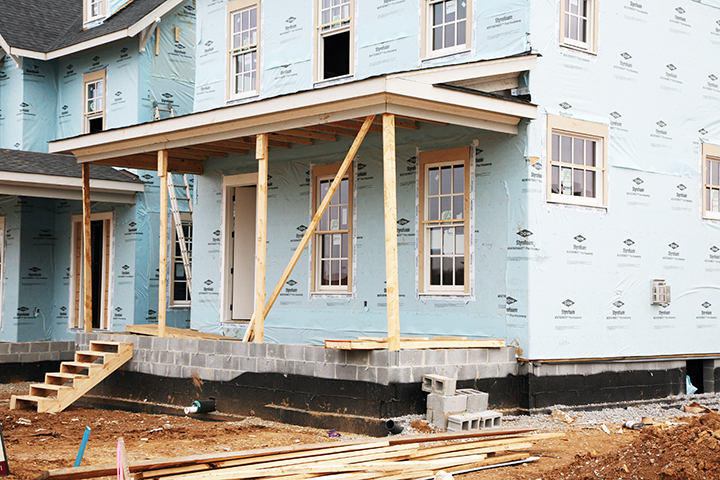 You and your crew have been working hard these past few months. In fact, you’re ahead of schedule. Then, you get a call from one of your jobsites. A woman tripped over a piece of scrap lumber and fell on the sidewalk in front of one of your nearly finished houses. None of your crew saw it happen since they were working inside. Your jobsite supervisor offered to call 911, but the lady seemed more embarrassed about what she described as her “accident proneness” and politely refused the offer. After that, she went on her way. No one bothered to get her name or contact information. You heave a sigh of relief and think all’s well that ends well. Still, you can’t shake the feeling; is there anything more you should have done?
Unfortunately, there isn’t much you can do. What’s the use reporting that an unknown woman fell at one of your jobsites, refused medical attention and disappeared. However, that doesn’t mean this isn’t a Premises / Operations claim under your General Liability policy. Many injuries take time to manifest indications of how serious they really are. The person can be in mild shock and truly believe they aren’t hurt. As they begin feeling pain, sometimes days later, they go to the ER and file the claim under their medical insurance. The medical insurer discovers where the injury happened and eventually seeks reimbursement against your general liability company. Now you may have to explain why nothing was reported. This could impact your renewal pricing. If the claim spirals into a really large loss, you may even face nonrenewal.
All this can be avoided by establishing and following a simple procedure for dealing with incidents involving the public. Whether they happen to a person or their property, the following suggestions may serve as a general guideline to assist you in setting up an Incident Reporting Procedure:
As soon as you learn of any accident or incident involving the public find out if anyone is injured.
• If someone is hurt, call 911. Stay with the person until first responders arrive and follow any instructions they may give.
• Don’t move the person unless you have to in order to protect them from further injury.
• If you administer first aid, make sure you, or someone you know is competent to do so.
• Don’t admit guilt or accuse anyone.
• Your focus is to keep the injured person calm and make sure they get the emergency medical attention they need.
• If the person refuses medical aid, don’t try to force them. Try to get their name, phone number and address, but don’t insist if they prefer not to talk to you.
• If someone’s property has been damaged, call 911 if first responders are needed to prevent the accident from getting worse - such as a fire spreading.
• Try to get the names and contact information of any witnesses. Keep in mind these may include neighbors or passersby.
• Without putting yourself or others at risk, do what you reasonably can to prevent further injury to people or damage to property.
• Contact your general liability insurance company as soon as you can. Give them all the information you have gathered.
• Put your Incident Reporting Procedure in writing. Make sure everyone in your organization is aware of it. Review it often at periodic safety meetings.
To sum up, a premises/operations claim is a claim under general liability when a member of the public is injured or their property is damaged at any place related to your business over which you have direct, or indirect control.* The extent of injuries or damage may not be apparent at the time of the accident, but knowing as much as possible as soon as possible can be critically important when and if the accident develops into a claim.
WANT TO EARN UP TO 25% OFF YOUR GENERAL LIABILITY PREMIUM?
If you are insured with the RWC INSURANCE ADVANTAGE, having a written Incident Reporting Procedure as part of a formal safety program can qualify you for significant discounts.**
For more information, visit our website: rwcinsuranceadvantage.com. Or if you’d prefer speaking to one of our licensed agents, give us a call at 1-866-454-2155.
*This generally describes a claim for premises/operations third party liability damages. The various terms, conditions and exclusions in the General Liability Policy must be established to determine if a claim is, in fact, a covered loss.
**Discounts are subject to all other underwriting criteria and are not guaranteed.[/vc_column_text][/vc_column][/vc_row]

Do you know your Account Executive? Are you aware of everything that your Account Executive (A.E.) can do for you? If you answered no to either of these questions, it is time to get acquainted!
Each state is assigned a specific A.E. who is more than just a product salesperson. You may have only interacted with one another when you initially signed up to become a member. Since you may have discussed your initial enrollment process with them over the phone, it is not always easy to recall with whom you spoke. To find your specific representative, you can call into our main office at 800-247-1812 (Texas: 800-445-8173) to inquire or visit our website and click the "Find Your Account Executive" link within the Builder tab's drop-down menu.
Your A.E. serves as more than an initial contact to guide you through the process, they are also your liaison and program concierge. Their role is to help you develop a suitable program for your business. As a member, you have access to a full array of programs and options. For example, if you desire to obtain a quote for liability insurance, wish to offer appliances coverage, or need additional training set up for your team, your A.E. can make these arrangements.
As the end of the fiscal year approaches, common practice dictates that a performance evaluation analyzing the prior year will be completed. Ultimately, it is a time in which new methods or ideas may be slated for implementation with the intention of improving the overall corporate health. Setting aside time to review your warranty coverages and comparing how your business has developed or changed can be a vital part of this process, the purpose of which is to aid in ensuring that a thorough evaluation has been considered. Since businesses can fluctuate from year to year, RWC/HOME recognizes that your initial warranty options may no longer work as a ‘one-size-fits-all’ solution. This is where your Account Executive can work with you to develop the best plan which complements these fluctuations.
If the timing for this sort of evaluation is currently not quite appropriate, keep in mind that your A.E. will periodically be reaching out to you via phone, email, or mailings. However, you do not have to wait for them to contact you to initiate the line of communication. When something from RWC/HOME passes over your desk, let it serve as a reminder to get in touch. Once it is time to think through all the ways in which your business may have developed or changed after your initial enrollment, your A.E. is your best resource. Setting a meeting with your RWC/HOME Account Executive will allow you the opportunity to review each of the servicing options at your disposal. Of the tools in your arsenal, the relationship you develop with your representative is a key component. Remember that they are your partners, meant to serve as a support system for your company, now and into the future.
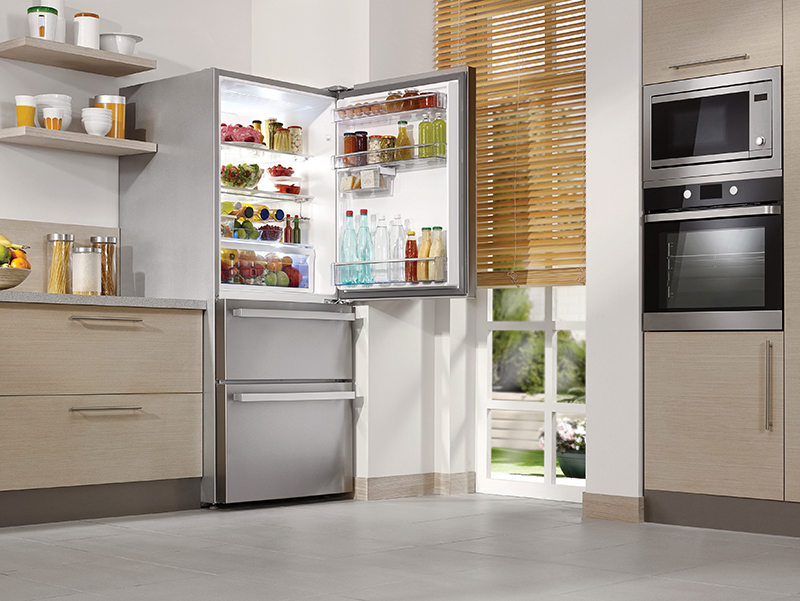 Key Estates Warranty is a new affiliate of Residential Warranty Company, LLC, HOME of Texas and MHWC is now offering extended warranties for homes involved in real estate transactions across the country. Offered exclusively through a network of approved Real Estate Professionals, the Key Estates Warranty program provides extended warranty protection on a variety of appliances, systems and even structural components in existing homes.
Homeowners understand that eventually, most things break down. Extended warranties are a cost-effective way to deal with expensive and unexpected repair bills after moving into a newly purchased home. The package approach of Key Estates provides the homebuyer with the security of more comprehensive coverage but at a substantially lower rate than if they were to buy individual extended warranties on each item of equipment. Through Key Estates, homeowners are protected against potential financial burdens for one or two-year terms on covered items. Without an extended warranty, homeowners may have to pay hundreds – or even thousands - of dollars for repairs. With Key Estates, homeowners are responsible for only a small service fee.
Key Estates personnel will conduct a remote visual inspection of the appliances and mechanical systems that are eligible for coverage. We will visually inspect photos /videos of the appliances for “trouble spots” that could indicate an imminent failure and search for recall notices. When the appliances pass the inspection, Key Estates certifies the home as warrantable and an insurance backed warranty is issued. This certification should add an additional layer of peace of mind for everyone involved in the transaction.
Major Structural Defect Coverage
With the average cost of major structural defect repairs in this country exceeding $35,000, Key Estates offers valuable protection from financial disaster should a structural defect develop in their existing home. Under Key Estates, a homebuyer may opt for major structural defect coverage – similar to the coverage provided to new home builders under our 10-year warranty plans – to be added to their plan for 1 or 2 years. No other resale warranty plan in the country offers this type of tried and true structural protection on existing homes! In addition, a structural home inspection conducted by a professional, licensed engineer, is part of the requirement to verify the structural ‘health’ of the home. This optional structural coverage is available everywhere except for Colorado and certain areas in Texas that have been designated as active soils areas.
Flexibility & Control
In addition to the never before offered structural coverage on existing homes, setting this program apart from others is the level of flexibility built into our system. Homeowners have the freedom to choose their own repair provider when a covered appliance or system breaks down. Additionally, they can select optional coverage for many of the ‘extras’ such as swimming pools, spas, freezers, etc. to further customize their plan.
Benefits
Real Estate Professionals benefit from Key Estates in a variety of ways. Exposure to customer service issues is dramatically reduced since the Key Estates’ administrator takes over complaint handling for problems with covered appliances, systems, and structural components. An administrative fee may be paid to the real estate professional for every warranty sold, generating extra revenue to make the program profitable and benefit that important bottom line. Ultimately, Key Estates provides a unique marketing tool that will set the Real Estate Professional apart from the competition.
Contact Us
For availability and more information about Key Estates or any of the other plans RWC and Affiliates have to offer, go to www.KeyEstatesWarranty.com, call 866-394-5135 ext. 2149 or email us at Sales@KeyEstatesWarranty.com.
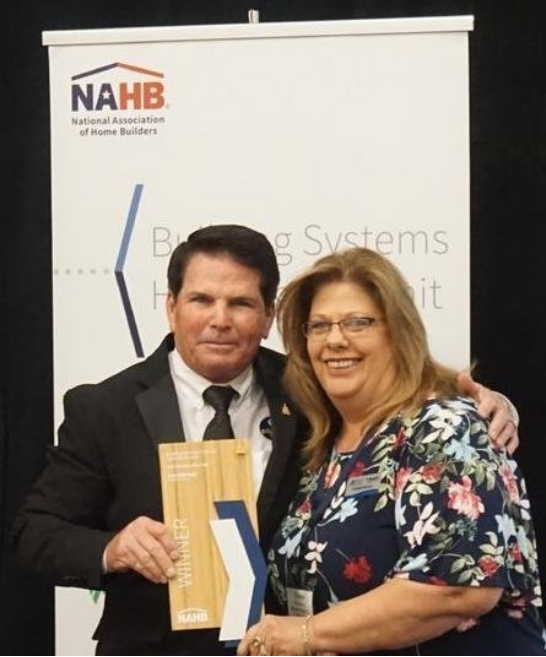 The Building Systems Council (BSC) Specialty Awards recognize one BSC builder, manufacturer, associate, and young professional for their contributions to the council, NAHB and the housing industry along with their involvement with civic or charitable organizations. Award winners demonstrate excellent business practices while providing outstanding service to his/her customers.
This year, one associate council member has stood tall amongst the rest. The winner of the 2018 Building Systems Councils Associate of the Year is Tifanee McCall of RWC/MHWC. Daniel Mitchell, Owner Eagle CDI, Inc. and Vice Chairman of NAHB's Custom Home Builders Committee presented Tifanee (pictured right) with her award at the recent NAHB Building Systems Summit in Knoxville, TN. Tifanee has been a BSC member for over a decade and currently serves as the council's second vice chairman and chairman of the membership and communications subcommittee. Kudos, Tifanee!
 Warranties come in all shapes and sizes and if you are looking for something besides the "traditional" new home warranty, RWC's Customized State Warranty (CSW)* is the answer! This warranty is the most unique and specialized new home warranty program in the industry. Each customized warranty is crafted specifically to meet each state’s statutes regarding new home warranties. The Builder’s liability is limited and individual state requirements for coverage are included, as applicable. RWC’s insurer covers warranted structural failures from day 1 throughout the entire warranty term.
For more information visit rwclive.wpengine.com and click "Warranties - State by State" under the Builder tab. You may also email sales@rwcwarranty.com or call 800-247-1812 x2149.
*Not available in AK, CO, HI, NJ & TX