
If you’re in the market for a new home, you should shop for your builder as carefully as you shop for your home. Whether you are buying a condo, a townhouse, a log cabin, a traditional house in a subdivision or a custom-built house, you want to know that you are buying a good quality home from a reputable builder. Here are some tips to help you choose a builder.
Research Home Builders in Your Area
Once you have thought about the type of house you want, you can create a list of potential builders. There are several ways to start building a list of professionals.
The best place to start is by contacting your local home builders’ association to obtain a list of builders who construct homes in your area.
Review the real estate section of your local newspaper to learn which builders are active in your area, the types of homes they are building, and the prices you can expect to pay.
Ask for Home Builder Recommendations
Local real estate agents can help you find the perfect location or recommend builders. You can also ask friends and relatives about builders they have dealt with directly or ask them for the names of acquaintances who have recently had good experiences with a builder.
Visit and Tour New Homes in Your Community
Look at new homes whenever you can. Home shows and open houses are good opportunities to explore homes constructed by builders in your community. Model homes and houses displayed in home shows are often furnished to provide ideas for using the space.
When examining a home, look at the quality of the main features. Inspect the quality of the construction materials, cabinetry, carpeting, trimwork and paint. Do not hesitate to ask questions about the work’s quality or craftsmanship. What seems like an insignificant question might yield a meaningful answer. A professional builder or their representative should be able to answer your questions thoroughly.
Find out if the Home Builder has a Reputable Business
When you have a list of potential builders, it’s time to start learning more about them. Maintaining a reputable business is a significant component of being a professional home builder. A top-notch professional integrates best practices, writes clear contracts, has insurance, provides warranties, and more. Also, professional builders will explain the construction process and building schedule to the buyer.
Ask about Contracts, Pricing and Payment Schedules
A qualified builder will provide a written estimate and a detailed contract before beginning the work. The contract should spell out what work will and will not be performed and provide a payment schedule. You are not protected when something goes wrong if you don’t have a contract. Don’t hire anyone who tells you a contract “won’t be necessary.”
Inquire About a Home Builders Business Practices
In addition, a professional home builder will be able to provide you with a copy of their business license and show proof of their workers’ compensation and liability insurance. These critical elements will protect you from liability for job site injuries or property damage resulting from the work performed on your home. Better business management means better service for home owners because they can rely on the builder to perform with integrity.
Learn About a Builder’s Level of Customer Service
Home builders strive to construct a new home that will satisfy their customers. They are committed to client satisfaction and emphasize the importance of delivering outstanding service from every member of their team and maintaining a professional approach in every interaction.
Builders will outline how you communicate during the home building process and do their best to accommodate your preferences. It is best to have clear communication expectations and discuss the frequency and method. How you communicate early on with each other will set the tone throughout the building process.
Ask About a Home Builder’s Experience
A builder will usually share how long they have been in business. Longevity suggests financial stability, which is necessary for the home builder to complete the job and still be available if problems arise after the job is finished. You want to make sure they will be around after the construction is complete to service any warranties. Also, the more homes the company has completed, the more expertise the builder will bring to your project.
Building a home is a complex activity. A professional builder is familiar with the construction standards, proper materials, the process from start to finish, new technologies, and has a deep understanding of the minor details and various tools essential to constructing a quality home.
Learn About the Builder’s Industry Education and Involvement
Also inquire about their involvement with professional organizations, such as your local builders’ association. Groups like these keep their members informed about better equipment, tools depending on construction techniques, construction technologies, business practices and construction standards. Participation can be an indicator of a builder’s commitment to professionalism and the residential construction industry.
Always Ask Home Builders for References and Contact Them
Any high-quality builder should be ready to provide you with the names and phone numbers of satisfied customers. If they cannot, consider that a red flag and walk away. When reaching out to those former clients, ask about all the pieces of the project. How well did the Builder follow through on the initial plans? Did the Builder meet their expectations with the main features, build, budget, and timing? Remember the most telling question: Would they hire that Builder again if they could do it all over?
“This article was reprinted with permission from NAHB.org”
In the little towns where we grew up, homeowners, like our parents, knew the people to hire if their home needed repairs or modifications. There was Mr. Allen for sidewalks and other flat work. Mr. Teufel was the man to call if you were replacing wallpaper, especially if the work was needed in your foyer or living room. The Wilson brothers were best for roofs, and if a ball had been thrown through a window, they would hire Mr. White, if they could get him. Often the deciding factor on whether to retain any of these gentlemen was not dependent on price, but on how soon they could come and do the work. They were all in demand because they were known to be craftsmen whose work was usually worth the wait.
Another such craftsman we were lucky to know personally was the carpenter, Mr. Nonemaker, or as we knew him, our great uncle Bill. He was a master cabinet maker who could remodel kitchens and fix anything, but more impressively to us at the time, could convert any dark or creepy basement that did not have a dirt floor into a rec room where countless hours of pool or ping pong would be played. For livelier and more well-heeled customers, he would add a bar, and perhaps a powder room. He was careful and methodical in his work and liked to fish a lot (and drink a bit), so sometimes his projects would take a while to complete. But he was worth waiting for. He loved when customers would tell him that friends and neighbors who were invited for the first time to the rec room or remodeled kitchen would run their hands along cabinets, drawers and seams before asking, “This is Mr. Nonemaker’s work, isn’t it?”
Times have changed, of course, with the big box hardware stores dotting the landscape and DIY “experts” populating You Tube with How-To videos. And that’s a shame because, while people might be getting their home repairs done more quickly and on their own time and money terms, they do not get to appreciate the product that was delivered by the Mr. Whites, the Wilson brothers, or the Uncle Bills we remember from just a few decades ago. Richard Sennett, the renowned American sociologist who studies work in modern culture, distinguishes mere work from craftsmanship and describes craftsmanship as “the desire to do a job well for its own sake.” White, the Wilsons, and Uncle Bill were not mere workers. They were craftsmen who took pride in their work, as if it were an art form.
With building supply prices near all-time highs and with pressure from buyers pushing housing prices downward, builders face pressure to keep their costs down. But just as it was decades ago, people will pay for quality and for a home they can take pride in, and nothing makes a homeowner prouder of his home than when people notice the craftsmanship that went into building it. A good way to distinguish your company from your competitors is to insist that your employees and subcontractors who are in the trades not just build to code but build with a level of craftsmanship that gets noticed and is appreciated by your customers and prospective customers.
You may think this suggestion is crazy given the reported shortage of skilled home building labor. This shortage is well documented in a study released by the Home Builders Institute earlier this year. According to the HBI, the aggregate economic impact from longer construction times associated with the skilled labor shortage costs the industry an estimated $10.6 Billion each year. The shortage also results in a reduction of nearly 20,000 homes built per year and an average increase in construction time of about two months per home built. In light of these findings, the NAHB and the HBI are supporting hands-on training programs and industry-recognized certifications to help produce a new generation of skilled laborers.
Recognition of this problem and an industry-wide effort to address it could not come soon enough. Here at RWC, for the first time in forty years, we have noticed an uptick in workmanship claims dating back to the Covid pandemic. Some builders in some parts of the country seem to have trouble finding subcontractors and skilled laborers who have and demonstrate the pride of a craftsman in their work. We believe each of our members, following the lead of the NAHB, can either rid themselves of this problem or make sure they don’t experience the problem in the first place in the following ways.
First, find young people (male and female) who are looking for a rewarding career that gives them the opportunity to do something they can be proud of. Start with vocational schools or check your local high schools for career pathway programs that team with employers to give students shadowing and interning opportunities. Throughout the process of exposing students to your operations, plant the seed early that your company is a place for craftsmen, that working there will be different from working other places, and that you want your whole team to take pride in what they do. If the articles we read about the expected growth of Artificial Intelligence can be believed, there will be many fewer entry-level white-collar jobs available to young people over the next decade. Get your recruitment plan ready now and grow that next generation of craftsmen from what may be an expanded pool of candidates.
Second, train your new employees and subs not just to build to municipal code standards, but to build to your company’s standards. Set that bar high enough that people, after seeing the high level of craftmanship in any of your homes, will turn to the owner and ask, “This is (Your Company’s) work, isn’t it.”
Third, if all goes according to plan, your skilled workers will improve your company’s reputation, increase sales, and even allow you to charge more for your homes. Share your good fortune with them. Pay them what they deserve, like craftsmen, who “do a job well for its own sake,” and thus keep them building for you and not for your competitor.
We believe that if you follow this plan, you will become even prouder of the homes you build, and you’ll sell more of them. And when you do, make sure that each and every one of your homes are covered by an RWC new home warranty.
Over more than forty years, RWC has provided warranty protection on over four million homes. We offer a wide variety of warranty options like our standard ten-year warranty, our Day 1 coverage warranty, our extended appliance and system warranties, and our specialty warranties for remodeling projects, detached garages, and commercial construction. Only RWC has developed and offers its members a customized state warranty that mirrors each state’s statute of repose and accommodates other state specific issues. All RWC warranties provide clear performance standards that help create realistic homeowner expectations and provide a road map to resolve even the stickiest customer complaints.
At RWC, every guarantee our warranties make is backed by Western Pacific Mutual Insurance Company, RRG. Western Pacific has an A- rating from A. M. Best and only insures home warranty and similar new home construction risks, like builders’ general liability, which can be offered through the RWC Insurance Advantage program to RWC members. No other warranty company has an insurer with this kind of strength solely dedicated to covering builders and their homes.
Like the skilled craftsmen you know, we at RWC take pride in our work and try to do every job well, just for the sake of doing it well. Help us put that attitude to work for you by placing an RWC warranty on every home you build.
Have a great fall & winter!
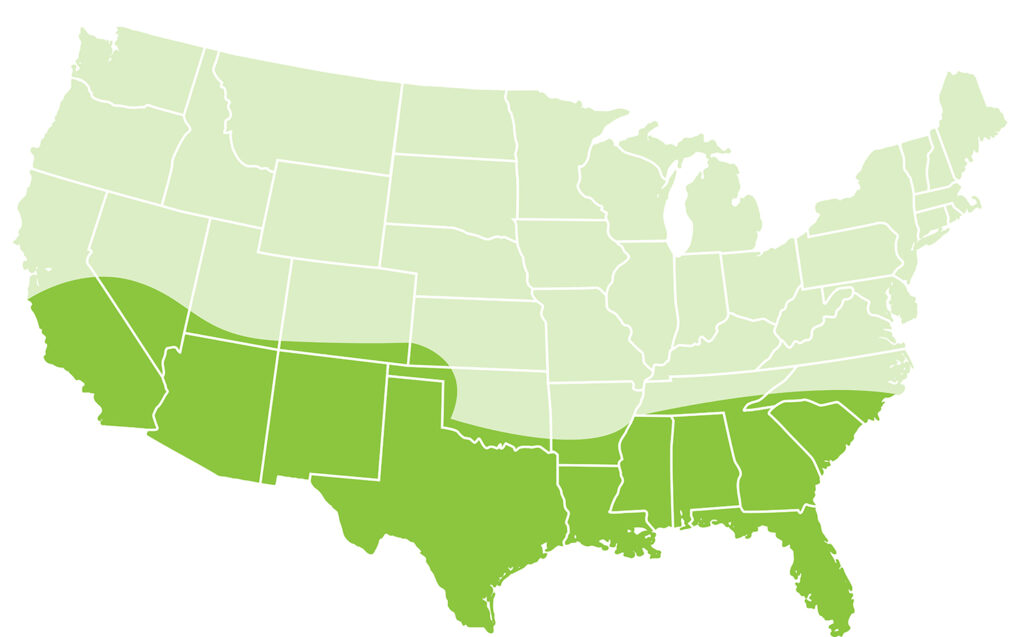 Builders, manufacturers and remodelers have new opportunities moving their way. As Sun Belt City populations grow, the need for new homes, remodels, additions and communities arise. Protect your investment with an RWC, HOME of Texas or MHWC warranty. Not only will the warranty limit your liability and give you the competitive edge, but it will also add value to your home and give your homebuyer that peace of mind they crave. Read on to learn more about this shift to warmer climates and be sure to take advantage of the many benefits RWC and affiliates have to offer.
The sun is shining, literally and metaphorically, on many states located within the Sun Belt. New data from the U.S. Census Bureau reveals that more people are choosing to leave the northern regions of the country, especially the Midwest, to settle in warmer climates.
The data includes population estimates and analysis of population changes for U.S. counties and metro areas, providing statistics for total population change, shifts in population due to natural increase, and domestic and international migration between July 1, 2014, and July 1, 2015, the Joint Center for Housing Studies of Harvard University reports.
The general trend shows that Sun Belt counties and metros — specifically, suburban counties in the South — are attracting the most new residents.
Texas, in particular, has been drawing people from other parts of the country, with Houston and Dallas-Fort Worth experiencing more growth than anywhere else in the U.S., gaining 159,000 and 145,000 people, respectively. A little further down the list are two other Texas metros, Austin-Round Rock and San Antonio, each of which grew by about 50,000 people. Combined, the population gain for these four Texas metros is 412,000, the highest total for any state. Florida, California, Georgia, and Washington round out the top five.
The counties that experienced the greatest population growth were also located in the southern and western regions of the Sun Belt. Harris County, Texas, and Maricopa County, Arizona, were the top two. All of the top 30 counties, in terms of population growth, were located in the West or the South.
Further breakdown of the overall population gains shows that Americans are seeking the sun. Domestic migration was also trending toward Sun Belt states with the top 10 counties for net population influx being located in Arizona, Florida, Nevada, and Texas. Many of the counties that appealed to domestic migrants also appealed to international migrants. However, some places, such as Los Angeles County, had high international migration but actually lost domestic migrants.
On the flip side, among the top 100 metros, Chicago had the biggest net population loss, with a drop of 6,200. Pittsburgh was next, losing 5,000 residents.
Source: Professional Builder