
NAHB, a leader in safety and health education and compliance assistance for residential construction, has released a new mobile tool called the NAHB Jobsite Safety Handbook. This application — available in both the Apple and Google Play app stores — was built to help home builders, contractors, and workers identify safe work practices.
This app covers the main safety issues residential builders and trade contractors need to focus on to reduce worksite accidents and injuries. Information is meant to provide a basic guide to understanding and conforming with the federal safety and health requirements of the Occupational Safety and Health Act and OSHA standards and regulations.
The app features resources for both classroom learning and on-the-job compliance, such as NAHB’s full Jobsite Safety Handbook, more than 50 safety video toolbox talks, all NAHBNow safety content, and an interactive quiz for users to test their safety knowledge. The app’s content is available in 15 languages.
This handy new app is a great tool for home builders and managers to engage workers onsite. Use the video content during safety stand downs on specific topics, or have new employees or trades take a “pop quiz” on jobsite safety in the app.
The NAHB Jobsite Safety Handbook app is free to download for both members and non-members.
 Millennia ago when solar eclipses caused the world, or at least the little piece of it occupied by a primitive culture, to slip into darkness as the sun disappeared in the middle of the day, ancient man often saw it as a mystical battle among gods or as an omen of bad times to come. Ancient Chinese believed that a dragon had attacked and devoured the sun. In India, a common belief was that a demon named Rahu disguised himself as a woman for the purpose of crashing a banquet of the gods, where he hoped to drink all the gods’ nectar. A major god Vishnu caught onto Rahu’s plan, cut off his head and hurled it across the sky. Ancient Indians believed that it was Rahu’s decapitated head that blocked out the sun. According to a Native American Choctaw legend, a mischievous squirrel gnawed on the sun, which caused it to slowly disappear.
The reactions to eclipses by our early forebears were even more bizarre than their explanations for the celestial events. Mayan rulers would cut themselves, collect their blood and offer it as a sacrifice to whichever god needed placated. Aztecs would become hysterical and sacrifice the people among them with the fairest hair and the lightest skin, which they believed kept demons from descending from the sky and eating everyone. In Mesopotamia and in Greece, after having developed the ability to predict that an eclipse was coming, the king would place an imposter on the throne as a decoy to fool the gods and keep any bad omens from affecting the real king. When the eclipse passed, the imposter was usually killed.
Even those cultures who did not engage in barbaric practices like blood-letting and human sacrifice saw eclipses as omens. As late as 1598, when William Shakespeare wrote King Lear, the king remarked that “these late eclipses in the sun and the moon portend no good to us.” This was the view of most societies since the beginning of time. There were exceptions like the Batammaliba people of West Africa, who believed that the eclipse occurred because the gods were angry with people for fighting with each other. During and after an eclipse, villagers would put petty arguments aside, stop fighting with their neighbors, and even give each other gifts.
The recent solar eclipse that carved a path of totality across the United States demonstrates how far modern man has come in his understanding of the universe. Many years of observation and study allow us now to predict not just when an eclipse will occur, but also how much of the sun will be blocked by the moon in any location around the globe. Thus, some of our friends and co-workers left our home office where there was about 92% coverage of the sun to travel to Cleveland and to eastern Indiana, where they were able to watch the total eclipse. All who chased totality mentioned how awe-inspiring an experience it was.
Rather than fearing and overreacting to an eclipse like ancient man did, 21st Century Americans can plan for, travel to, and embrace a total eclipse for what it is--an awesome display of the universal and physical principles by which our universe works. And we can do that because for centuries mankind looked at the sky, asked questions about what was happening, and eventually figured it out through hard work and study.
This same principle applies to business, and particularly to the business of home building. We have heard friends oversimplify it this way: “You build a home and sell it for more than it cost to build.” Those folks might just as well believe that a squirrel ate the sun on April 8th or that the fender-bender they had last week was foretold by the eclipse. We know better. But do we know enough or all that we can know?
Just like the astronomers and physicists who figured out solar eclipses, every builder should look at his company’s universe and ask hard questions. What kind of homes are people buying now? What are people likely to buy five years from now? What can my potential clients afford to build? Will the price of timber rise or fall in the next year? How will interest rates and the cost of financing affect sales over the next eighteen months? Is the population in my area aging or getting younger on average, and how will that affect my customers’ housing choices? Big houses or small houses? Singles or towns? Town or country?
 You get the idea. By asking and answering these kinds of questions, any builder will gain a better understanding of his business and its challenges and will increase his profitability. A good project is to write out twenty such questions (or as many as you can think of) and then put in the study, thought and effort necessary to answer them. We think you will enjoy and benefit from the project. (And you better get to it soon before that squirrel gobbles up the sun!)
If one of the questions you ask yourself is, “How can I best protect my customers and my company from construction defect claims?”, we have the answer for you. Place an RWC warranty on every home you build.
In our more than four decades of home warranty experience RWC has covered more than four million homes. We offer a wide variety of warranty options like our standard ten-year warranty, our Day 1 coverage warranty, our extended appliance and system warranties, and our specialty warranties for remodeling projects, detached garages, and commercial construction. Only RWC has developed and offers its members a customized state warranty that mirrors each state’s statute of repose and accommodates other state specific issues. All RWC warranties provide clear performance standards that help create realistic homeowner expectations and provide a road map to resolving even the stickiest customer complaints.
At RWC, every guarantee our warranties make is backed by Western Pacific Mutual Insurance Company, RRG. Western Pacific has an A- rating from A. M. Best and only insures home warranty and similar new home construction risks, like builders’ general liability, which can be offered through the RWC Insurance Advantage program to RWC members. No other warranty company has an insurer with this kind of strength solely dedicated to covering builders and their homes.
Don’t be eclipsed by your competitors. Give your customers the best warranty under the sun—an RWC warranty.
Have a wonderful Summer!
The building sector in New Jersey is undergoing a dramatic transition in 2024, one that is focused more on innovation, sustainability, and community-centered development. Statewide, developers and architects are adopting a number of ideas that are changing both the built environment and how people live and work.
 The use of green building techniques has made sustainability a prominent theme in architectural design. Buildings are being constructed with the least amount of negative environmental impact and maximum energy efficiency in mind. This covers passive design principles and the use of environmentally friendly materials.
Smart building technologies are at the forefront of innovation and have fundamentally altered the way buildings work. By optimizing energy consumption, enhancing security, and improving occupant comfort, IoT devices and advanced automation systems are helping to create more responsive, efficient, and user-friendly buildings.
Mixed-use developments—which combine residential, commercial, and recreational spaces—are growing in popularity, especially in urban areas. With the help of these projects, communities will be able to live, work, and play close to one another, promoting convenience and a sense of community.
The growth of adaptive reuse projects, which entail converting pre-existing buildings—such warehouses and factories—into new spaces like lofts, offices, or cultural centers, is another noteworthy development. By preserving the architectural history of the past and meeting modern needs, these initiatives help to preserve the uniqueness and individuality of the local community.
All things considered, these architectural innovations demonstrate a dedication to creativity, environmental responsibility, and neighborhood involvement, influencing New Jersey's construction scene going forward.
The days of supply chain shortages may be in the rearview mirror, but a new challenge now plagues the construction industry - an increasing lack of skilled construction labor. To meet market demand, the construction industry needs approximately 723,000 new workers each year. The number of open construction sector jobs currently averages between 300,000 to 400,000 every month.
Home Builders Care, the charitable arm of the Home Builders Association of Central Arizona, recently opened the Home Building Academy in Phoenix. Here students participate in a nine-week, rapid worker training, resulting in industry-recognized certificates in either carpentry or electrical work. The academy is tuition-free for qualified students, and students maintaining “satisfactory” academic progress will receive a weekly stipend for living expenses. Successful graduates will also receive a set of tools, boots, work clothes, and personal protective equipment.
 But is simply providing the avenue of study enough of a draw to the next generation of potential contractors? To answer that question, one must understand the mindset and motivations of the Millennial and Gen Z generations. They are digital natives who grew up with the internet and technology and are used to constant stimulation and fast-paced living. They also value work-life balance, diversity, and flexibility in the workplace, and seek to make a social impact through work. They expect employers to care about their well-being. Diversity, equity, and inclusion (DEI) are important. To attract and retain the next generation of workers, companies must take steps to adapt their workplaces and recruiting practices to meet these needs and values.
A company’s brand and reputation can be just as important as its salary or benefits. While a company can have a fantastic reputation with clients, it’s irrelevant if young workers don’t have the same perception. If they feel like it’s not keeping up with modern trends or providing them with the opportunity to make an impact, they may be less inclined to work there. To overcome this barrier, companies must take a proactive approach to build a positive market reputation and brand. This may involve volunteer projects, community partnerships, social media presence, or other marketing initiatives highlighting the company’s values and commitment to progress.
Young workers are drawn to companies that have transparent, inclusive cultures where employees feel valued and respected. One way to create this type of workplace is by investing in opportunities for professional development. For example, offering classes on topics like leadership and management, communication, digital technologies, or DEI. Allowing workers to develop their own ideas and solutions can also help foster a sense of belonging, ownership, and engagement in company culture.
Today’s young workers also seek companies that can provide career growth and development opportunities. They need to know that their job is important to the company’s success and that they’re not just a number. Offer mentorship, growth, and development opportunities such as hiring or promoting individuals with knowledge and expertise in a certain area, pairing young workers with more experienced employees, or offering training workshops to improve their skills and help them advance in their careers.
And, let’s face it, money is always a huge motivating factor. No one is looking to work for free, and if compensation or benefits packages don’t meet expectations, employees are quick to leave. At a minimum, to attract a young construction crew, a company should be offering competitive base salaries and benefits packages. This may include things like health insurance, paid time off, and retirement plans. Disability and life insurance and other perks, such as gym memberships, health and wellness programs, or free lunches, are another way to set a company apart.
Millennials and Gen Zers are tech-savvy and expect construction companies to be as up-to-date and innovative when it comes to technology, just as they are in other industries. The construction industry is often slow-paced when it comes to adopting new technologies, but if they want to attract and retain the best young talent, they need to start investing in technology that will help them stay competitive.
Then there is the actual hiring process - most construction companies rely only on traditional recruitment methods, such as job boards or recruiting agencies. But the reality is that only a fraction of available talent will appear on these lists - and they may not be the best candidates for a company. To attract and retain young workers, a more proactive approach needs to be taken. Build relationships with local universities and colleges, offer internships, co-op programs, or attend job fairs. Use social media platforms like LinkedIn, Twitter, Facebook, or Instagram to engage with potential candidates and share information about company culture and opportunities. Host recruitment events or offer internship programs to connect with young workers and give them a chance to see what working in construction is like.
Attracting and retaining construction workers has never been easy. But by focusing on the needs and preferences of younger workers, investing in a company’s culture and workplace environment, and actively reaching out to potential employees helps the industry build a strong team of young talent that will help an organization thrive for years to come.
The Kevin Costner film, Field of Dreams, is a favorite movie of sports fans, and of baseball fans, in particular. Based on W. P. Kinsella’s novel, Shoeless Joe, the movie follows the struggles of an Iowa farmer, Ray Kinsella, who tries desperately to wring enough money from his farm to keep the lenders who hold the mortgage on it at bay. He begins to hear a voice saying, “If you build it, he will come.” He wonders if the voice is a dream, a symptom of a psychological problem, or the deliverer of an important message to him.
 Ray’s wife Annie, played admirably in the movie by Amy Madigan, wonders, too. She listens to her husband describe the voice and the other messages it conveys: “Ease his pain”; and “Go the distance”. Then Ray sees a baseball field in the middle of his corn and an apparition of the long-dead Shoeless Joe Jackson, who was a great player from the early twentieth century and who was his father’s favorite player, standing in the middle of the imaginary baseball diamond. He feels called to construct the field, and despite her concerns about her family’s security and her worries that they may soon lose their farm to creditors, Annie accedes to his plan to build the ball field.
Shoeless Joe and his teammates, who were banned from baseball for fixing the 1919 World Series, begin showing up and playing on Ray’s field. They seem to enjoy themselves, but Ray has trouble understanding how he fits into the picture. At a school board meeting, Annie argues against a group of parents who seek to ban books from the school’s library, particularly the books of Terrence Mann, who is a favorite author of her husband’s and hers. Ray then remembers a reference in one of Mann’s books to a baseball player named Kinsella and takes this as a sign that Terrence Mann might have the answer to what Shoeless Joe, the voices, and the field might mean for Ray Kinsella.
Costner’s character travels across the country to Boston and brings Terrence Mann, played wonderfully by the great James Earl Jones, back to his farm. Ray is still unclear about what is in it for him, but Shoeless Joe provides the answer. As the players are wrapping up their game and heading back into the cornfield where they magically disappear each night, he says to Ray, “If you build it, he will come”, and he nods toward a catcher who is removing his gear and staying behind. As Shoeless Joe disappears into the corn, Ray realizes it is the spirit of his father.
Later, still worried about the fate of his family and farm, Ray looks to Terrence Mann for assurance. Mann explains that the field will be an attraction that people will pay to see, and in the best lines of the movie, Mann assures him that, “People will come, Ray. People will most definitely come.” The movie ends with a scene of a road full of cars driving up to the Kinsellas’ cornfield that has become a field of dreams.
But why are we recounting this movie to you? First, it’s a great movie, one of our favorites. If you haven’t seen it, you should. If it’s been a while since you saw it, we recommend that you watch it again. This time, though, think about the voice, and what that iconic line, which we paraphrase here, might mean to your building business.
If you build it, they will come. “They” means your future customers, and the “it” is not a cornfield in Iowa. In this context the “it” is the kind of home your future customers are looking to buy.
It’s easy to get in a rut and stay with a product that has been successful in the past, even after that product is no longer as popular as it once was. The auto industry has experienced this with some regularity. Large cars with big fins were replaced by sportier models with big engines that eventually were replaced by aerodynamic fuel-efficient vehicles. Station wagons gave way to vans that gave way to SUVs, and gas guzzlers are being replaced by hybrids and electric cars. Nearly every industry goes through this, and the homebuilding industry is no exception.
Today’s new home buyers are different from the ones twenty, ten or even five years ago. The Covid pandemic has caused some of the open floor plans of recent years to give way to more private spaces in houses to allow for home offices and quiet places for students to attend class remotely. The new generation of homebuyers (under the age of forty) are placing added emphasis on patios and see the kitchen island, with its ability to serve the multiple purposes of additional workspace, a makeshift breakfast bar, and added storage, as more of a necessity.
Affordability is even more important to today’s new home buyers. In September 2023, the annual median new home price dropped by the largest amount since 2009, with most homes selling in the $150,000 to $499,999 range. Following a stretch of high inflation and with interest rates hovering near a twenty year high, many prospective new home buyers cannot afford to pay as much for a house as they might have paid two or three years ago.
To have more success and to gain an edge on your competition, it is a good idea to study what prospective buyers in your market want and then deliver that product at a price those prospects can afford to pay. If you do that, the people will come. They will most definitely come. And they will buy your houses.
Another way to gain an edge on your competition and to give your homebuyers and you peace of mind is to place an RWC warranty on every home you sell. When you do that, you can be confident that your homebuyers are in good hands and that any construction defect claims they have will be handled with the utmost care and professionalism.
In our more than four decades of home warranty experience RWC has covered more than four million homes. We offer a wide variety of warranty options like our standard ten-year warranty, our Day 1 coverage warranty, our extended appliance and system warranties, and our specialty warranties for remodeling projects, detached garages, and commercial construction. Only RWC has developed and offers its members a customized state warranty that mirrors each state’s statute of repose and accommodates other state specific issues. All RWC warranties provide clear performance standards that help create realistic homeowner expectations and provide a road map to resolving even the stickiest customer complaints.
At RWC, every guarantee our warranties make is backed by Western Pacific Mutual Insurance Company, RRG. Western Pacific has an A- rating from A. M. Best and only insures home warranty and similar new home construction risks, like builders’ general liability, which can be offered through the RWC Insurance Advantage program to RWC members. No other warranty company has an insurer with this kind of strength solely dedicated to covering builders and their homes.
Here’s hoping you continue to dream big and that you choose to go the distance with RWC by your side. Have a great winter!
On November 19th, the Formula One Grand Prix World Championship took over the streets of Las Vegas. Before we know it, we will be exiting 2023 and racing toward the end of the year. With that in mind, now may be a good time to glance in the rearview and reflect on this past year in preparation for 2024.
Warning lights glowing on the dashboard can signify that it is time for maintenance. Our businesses, however, do not have cut and dry notification systems. This makes it very easy to forget the importance of regular tune-ups. Add in the fluidity of changes in the real estate industry and without warning you could easily end up spinning out.
Brainstorming new ideas can start with simple questions. Has your company seen an increase or decrease in the number of homes being built? What are your competitors spotlighting in their marketing? What sets your company apart from the pack?
If it has been several years since you performed this type of check-up, you are not outside of the norm. Unless something very clearly veers off course, we can inadvertently miss areas of opportunity or forget the importance of reviewing marketability.
Market fluctuations, inflation, and recession talks have fueled changes in every facet of our industry. These economic barriers have, in some cases, led to an increase in insurance rates and brought about a resurgence of unique marketing strategies. Idling in the comfort zone of day-to-day ‘business as usual’ could potentially prevent you from propelling forward.
There are numerous ways in which RWC Warranty can help determine if things are running efficiently, starting with a general overview to confirm your company is getting the most out of our partnership. Here are a few examples of how we can help:
- Provide a comparison insurance quote.
- Set up extended appliance coverage.
- Confirm you have the most up-to-date marketing materials.
- Review what programs or rewards options may fit your structure better.
- Train your team on our products and the function of the warranty.
Our goal, as your warranty service provider, is to offer solutions which help your business consistently run efficiently. Consider your local Account Executive to be a part of your personal pit crew here to get you back on track.
As always, we look forward to working with you and your team. Our biggest compliment is your positive feedback and referrals. A special thank you to those that leave a kind word on our Google reviews. No time like the present... click here to rate or review RWC.
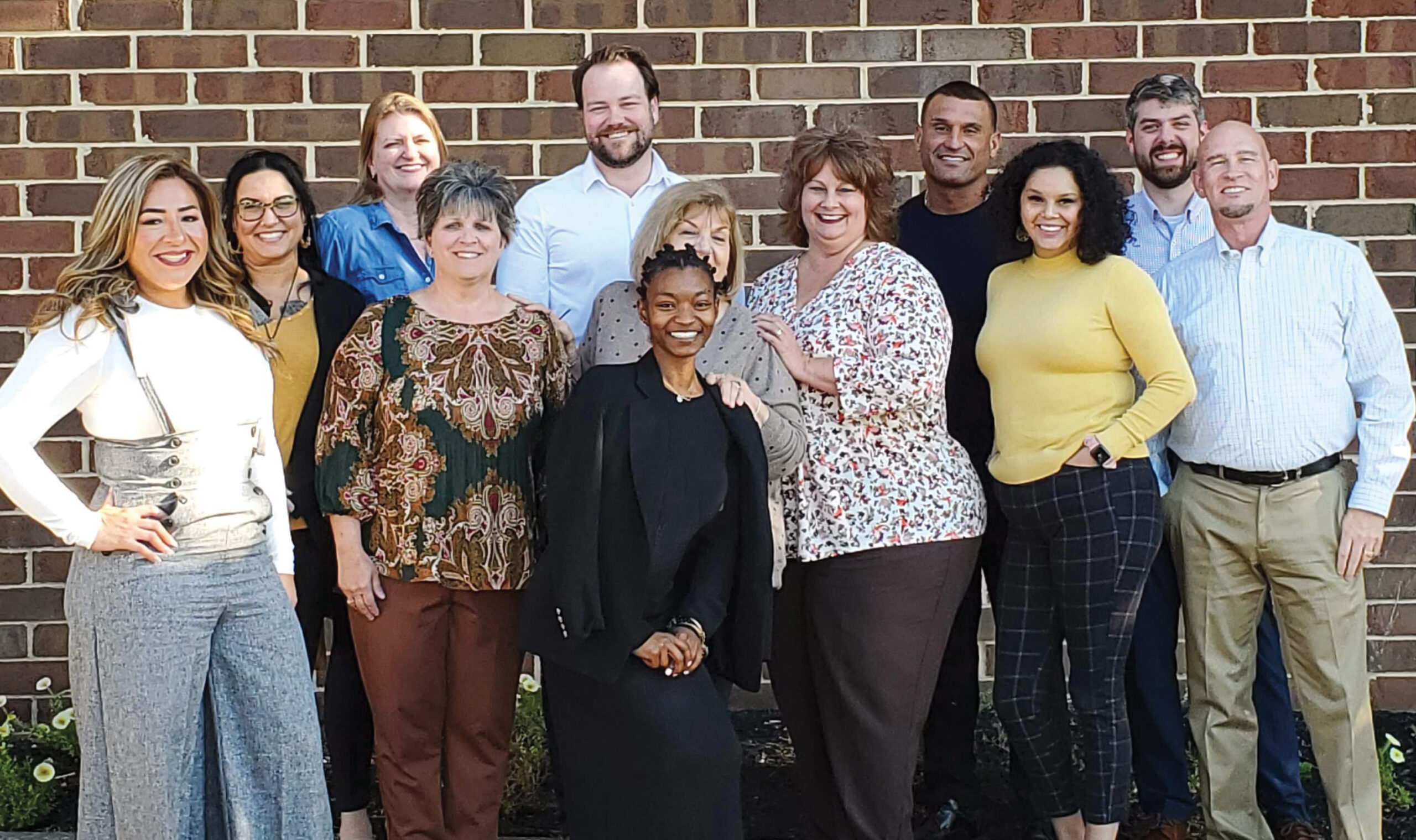 The 2023 National Sales Meeting, held in Harrisburg, PA, October 24-26, brought forth a blend of emotions as we welcomed new faces, felt the absence of some big personalities, and embarked on a journey to accomplish some major achievements.
At the 11th hour we got the unfortunate news that we would be without fellow colleagues Fred Taylor and Jana Watts for the weeklong rally. They were sorely missed personally and professionally, as two of our most prolific and confident “conversation starters.” Some new faces included Crystal Jackson from the Midwest, Tiaira Satchell covering the northern mid-Atlantic region, and Logan Canby as our new New Jersey Account Executive.
The other elephant in the room was the absence of our long-time leader and recent retiree, Sue Palkovic. Sue’s fingerprints were all over this meeting as most of the leg work putting it together came from her and Assistant Manager, Jody Lehman. Many thanks to both for shaping it up.
The first day of the meeting kicked off with 30 minutes of where we came from, where we are now, and where we’re going with President/Owner, George Parmer. Richard Swartz, Executive VP and Chief Counsel was up next to share his words of wisdom and encouragement. Additional managers who delivered presentations and lead brainstorming sessions included those from the IT Department, Insurance, and Marketing.
We also formally announced the results of our annual sales competition with Staci Cool taking first place and Fred Taylor grabbing second. Additional certificates of merit were awarded as well.
The 2nd annual Round Robin Session took place the next day at the corporate office. Account Executives were teamed up and conducted visits to the Membership, Enrollments, and Warranty Resolution Departments to gain insights into current developments and to refresh their knowledge of daily operations. The third and final morning started off with discussions of our Key Estates Extended Warranty Product. The afternoon allowed management to rejoin the sales team for a comprehensive review of the Round Robin sessions. The conversation proved to be productive and forward thinking. Such opportunities for the Account Executives to interact and brainstorm with the staff at the corporate headquarters are priceless. It creates a chemistry and camaraderie that is enviably portrayed in our business practices with our members and their homeowners.
Ambition was high heading into the meeting. We’ve put a lot on our plate for 2024. There’s one way to get there. In the words of Rich Swartz (quoting his track and field coach) - “Run as hard as you can for as long as you can.” and that's exactly what we plan to do.
 Optimism. It was a favorite theme of our parents when they told us to hold our heads high and keep our chins up. We heard it from coaches and teachers who suggested that we should look on the bright side of things. “Count your blessings” is advice often heard from friends and counselors. Optimism is a recurring element in books, movies, and music. If we try hard enough, we can almost hear Louis Armstrong urging us to “Grab your coat, grab your hat, leave your worries on the doorstep. Just direct your feet to the sunny side of the street.”
Optimism has been described as hopefulness and confidence about the future or about the successful outcome of something. Most of us have lived long enough to know that an optimistic path filled with hope feels much better than a pessimistic one characterized by a sense of dread or despair. Medical and psychological research suggests that there are tangible and even provable positive effects when we live our lives optimistically.
Optimists feel healthier. If we tend to believe that life will work out in our favor, we are more likely to rate our sense of well-being and health higher. Optimists have a lower incidence of cardiovascular disease and better cholesterol numbers and are generally healthier. Optimists live longer, and their immune systems are stronger. They tend to have better relationships with others, they enjoy their work more, and they are less prone to stress.
Being an optimist makes emotional, medical, and psychological sense. Sometimes, however, troubling circumstances can make even the most happy-go-lucky person worry, and doubt can creep in causing us to become, well, pessimistic. In these days of the twenty-four-hour news cycle and with the explosion of social media, it seems that, everywhere you look, someone is dying to tell you how bad things are and how worse they are going to get.
This constant drumbeat of negativity can affect people in all walks of life, and builders are not immune from the stories that affect us all. Some stories, however, hit closer to home with builders. Labor shortages and supply chain problems have lingered after the pandemic and still have not been resolved. War in Europe has spooked financial markets and wreaked havoc on the price of oil. Inflation and the resultant hike in interest rates have made some homebuyers skittish and have driven some out of the market altogether.
When we think about these circumstances, we could hang our heads or mope around. But it is important, even in times like these, to be optimistic and to consider the words of Benjamin Franklin who wrote, “While we may not be able to control all that happens to us, we can control what happens inside us.” That is, we can choose to keep our chins up, count our blessings and look on the bright side of things. We control what happens inside us by staying optimistic, and in that way, we continue to enjoy life and reap the benefits that optimism brings.
Not letting these kinds of problems affect our mood or our outlook on life is healthy, but thinking positively about the future will not make the problems go away. What is an optimist to do in these circumstances? The great British statesman Winston Churchill answered this question when he wrote: “The pessimist sees difficulty in every opportunity. The optimist sees opportunity in every difficulty.”
Rather than wringing his hands over a tough economy, the optimist looks for whatever opportunities these difficult times present. If we are not as busy building houses, we can identify our best workers and subcontractors and do those things necessary to keep them in the fold. We can also cull those who are problematic, who are not team players, or who do not fit into our long-term plans. We can analyze the market and check to see if the designs we offer our customers are consistent with current trends. We can sharpen our pencils and decrease expenses by finding the best value in building supplies and by looking for more efficient ways to build our homes. By seeing these opportunities in our present difficulties, the optimistic builder can make his company stronger and come roaring out of these doldrums at the helm of a better and more profitable company.
Making money from the work that goes into creating a business and running it well is good, but keeping those hard-earned dollars is even better. We believe one of the best ways for you to protect your bottom line and to hold on to more of your profits is to place an RWC warranty on every home you sell. After closing on a home, you can get on with building the next one, confident that your homebuyers are in good hands and that any construction defect claims they have will be handled with the utmost care and professionalism.
In our more than four decades of home warranty experience, RWC has covered more than four million homes. We offer a wide variety of warranty options, like our standard ten-year warranty, our Day 1 coverage warranty, our extended appliance and system warranties, and our specialty warranties for remodeling projects, detached garages, and commercial construction. Only RWC has developed and offers its members a customized state warranty that mirrors each state’s statute of repose and accommodates other state-specific issues. All RWC warranties provide clear performance standards that help create realistic homeowner expectations and provide a road map to resolving even the stickiest customer complaints.
At RWC, every guarantee our warranties make is backed by Western Pacific Mutual Insurance Company, RRG. Western Pacific has an A- rating from A.M. Best and only insures home warranty and similar new home construction risks, like builders’ general liability, which can be offered through the RWC Insurance Advantage program to RWC members. No other warranty company has an insurer with this kind of strength solely dedicated to covering builders and their homes.
We are optimists here at RWC, and we know life is better on the bright side. Here’s hoping your homeowners and you join us there!
Have a great Summer!
MHWC, RWC's sister organization providing manufactured home warranties to HUD-Code Manufacturers and Builder/Dealers, is excited to announce the launch of their newly redesigned website.
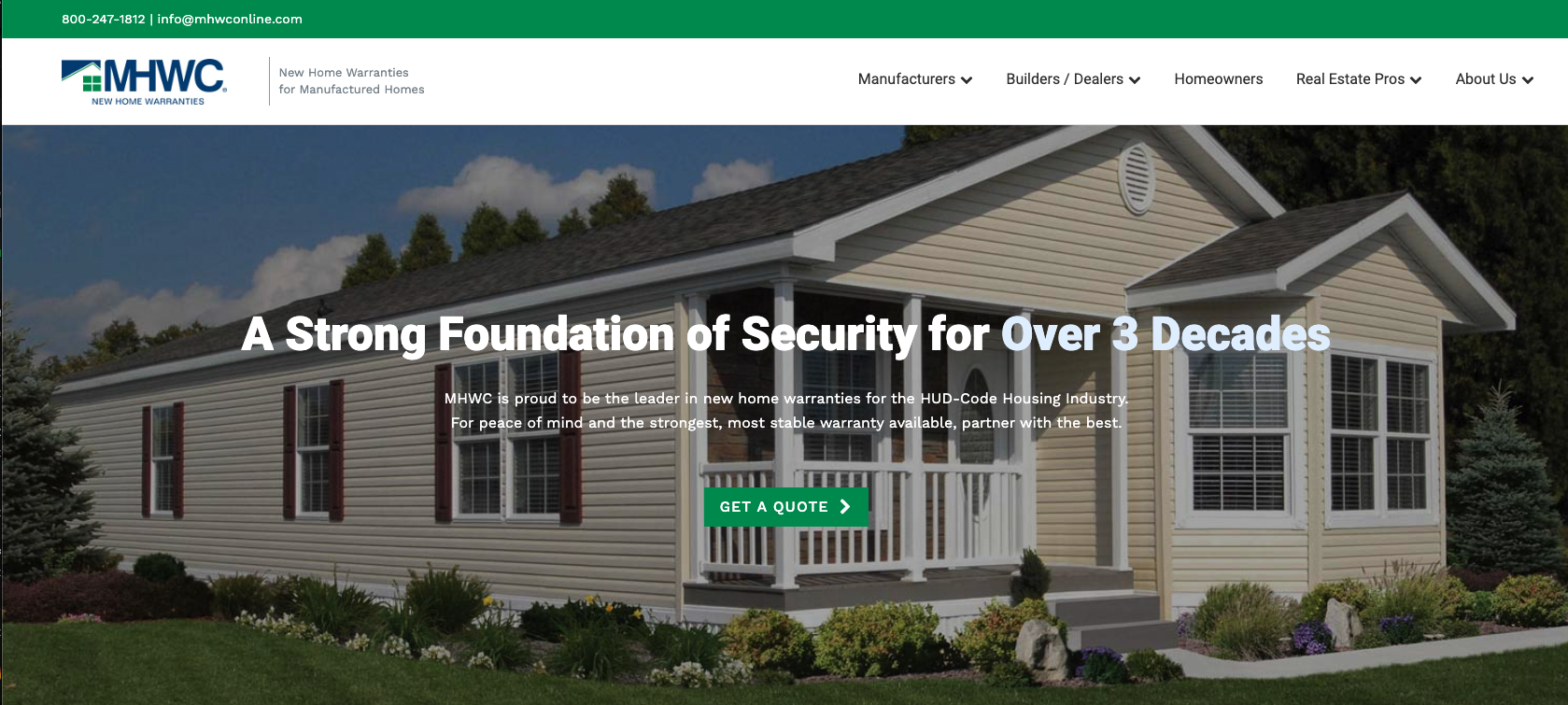
The streamlined menu is easy to navigate and the modern layout lends itself to a faster and better user experience. Have a look! Maybe you'll discover something new about the MHWC warranty. Our current and prospective members will find detailed info about our warranty products, instructions on how to become a member, resources for existing members, tradeshow schedules, FAQ, and can even contact us through one of the convenient online forms.
Hypothetical situation. Let's say you've been contracted to build a custom home by someone who was referred to you by a satisfied customer. This individual owns the land and is financing the project out of his own pocket. You are the general contractor with complete authority over the entire project. The single family home you're building is a typical design and requires nothing out of the ordinary. Construction proceeds without a hitch. Then, with the house about 80% complete, fire breaks out in the basement on a Sunday night. The fire department determines a homeless person had decided to camp out in the unsecured structure and started a small fire to keep warm. Of course, it quickly got out of control and now more than $200,000 in materials have literally gone up in smoke.
 Your customer thought you were responsible for buying Builders Risk coverage as the general contractor. You were sure they had agreed to purchase a policy as the owner of the project. The written contract makes the general contractor, you, responsible for "all insurance." So you lose that argument. As someone who knew what they were talking about once observed, insurance isn't important until you need it. In trying to figure out what went wrong, you conclude that you have had to finance most of your projects in the past. That meant getting a construction loan from a bank. They won't lend a dime without proof of builders risk. In this case, there was no loan officer to dot all the i's and cross all the t's. Life is in the details.
Thankfully, this is only a hypothetical situation. Few professional builders would make such a mistake...right? Don't take chances. The RWC Insurance Advantage offers Builders Risk coverage almost anywhere in the United States for virtually any size residential construction project through Zurich - number one in Builders Risk insurance.
For more info or to get a quick quote:
www.rwcinsuranceadvantage.com
866-454-2155
